 Veda Tour

Introduction
Deciding on cosmetic surgery abroad in 2026 can provide access to highly trained surgeons and modern facilities, often at more accessible rates than in many home countries. However, medical tourism for procedures such as rhinoplasty, liposuction, breast augmentation, or facelifts carries inherent risks including varying regulatory standards, communication barriers, and challenges with follow-up care. Informed patients who thoroughly vet providers significantly reduce these risks and improve outcomes. This comprehensive guide presents ten essential questions designed to uncover a clinic’s true commitment to safety, surgeon expertise, and comprehensive patient support. Each question includes explanations of its importance, examples of strong versus evasive responses, practical next steps, and guidance on interpreting answers. By the end of this article, readers will have actionable tools to make confident decisions and avoid common pitfalls associated with overseas cosmetic procedures.
Medical tourism continues to grow, with thousands of patients traveling internationally each year for aesthetic treatments. While many experiences are positive, complications can arise when clinics prioritize volume over individualized care. Asking targeted questions during initial consultations helps separate reputable providers from those that may overlook critical details. Patients should document all responses in writing and compare multiple clinics before committing.
Question 1: What Are the Surgeon’s Credentials and Specific Experience?
Begin every consultation by requesting verifiable proof of the surgeon’s board certification, years of specialized practice, and exact case volume for your chosen procedure. A strong answer includes membership in recognized international organizations, a detailed portfolio of before-and-after photos from patients with similar body types and ethnic backgrounds, and statistics on complication rates. Evasive replies often reference general surgical experience without procedure-specific numbers or deflect by emphasizing the clinic’s overall reputation instead of the individual surgeon. In real-world scenarios, patients who accepted vague answers later discovered their surgeon had performed fewer than ten similar operations, leading to unsatisfactory results and costly revisions at home. Always request the surgeon’s CV and cross-check it against official medical board registries in the destination country.
Question 2: Is the Facility Internationally Accredited?
Accreditation from bodies such as Joint Commission International or national equivalents demonstrates adherence to rigorous safety and hygiene protocols. Request current certificates and ask how frequently audits occur. Strong clinics willingly share these documents and explain their quality-control measures. Facilities that claim “high standards” without providing verifiable accreditation should be avoided, as this often indicates shortcuts in sterilization, equipment maintenance, or staff training. Patients have reported infections traced to unaccredited clinics that lacked proper ventilation systems or emergency equipment.
Question 3: What Emergency Protocols Are in Place?
Inquire about on-site intensive care capabilities, 24-hour physician coverage, and formal transfer agreements with nearby hospitals. Reputable centers provide specific response times, staff certification details, and examples of how past emergencies were handled. Vague assurances such as “we follow standard procedures” or “everything is covered” are red flags. One documented case involved a patient requiring immediate transfer after an adverse reaction; clinics with pre-established protocols managed the situation smoothly, while others delayed care due to lack of preparation.
Question 4: How Are Costs Broken Down and What Is Included?
Request a fully itemized quote covering surgeon fees, anesthesia, facility charges, medications, compression garments, and all follow-up visits. Transparent providers list every component and clarify what happens if additional treatments become necessary. Clinics unwilling to itemize or that add unexpected charges after arrival create financial and emotional stress. Patients should also ask whether currency fluctuations or additional taxes could affect the final amount.
Question 5: What Does the Recovery Assistance Plan Entail?
Learn the exact schedule of post-operative monitoring, nursing support, and accommodation arrangements for the initial healing period. Strong plans include daily wound checks, transportation to appointments, and clear instructions for activity restrictions. Minimal support packages often leave international patients managing drains or medications alone in unfamiliar hotels, increasing complication risks. Ask for a written timeline covering the first two weeks after surgery.
Question 6: How Is Aftercare Coordinated Upon Returning Home?
Effective clinics establish partnerships with physicians in your home country and provide detailed operative reports and care instructions for seamless handoff. They outline communication channels for questions arising weeks later. Poor coordination frequently results in undetected issues such as seromas or wound dehiscence. Request sample medical records and confirmation of who will receive them.
Question 7: What Is the Policy for Revisions or Complications?
Ask specifically about coverage for revision surgeries if aesthetic results fall short and protocols for managing infections or other complications. Clear written policies that define responsibilities and timelines protect patients. Ambiguous answers such as “we’ll discuss that later” leave patients bearing full financial and medical burden upon return. Always obtain these policies in a signed document before booking travel.
Question 8: Can You Provide References from Recent Patients?
Request direct contact information or verified testimonials from individuals who underwent identical procedures within the past year. Authentic providers facilitate connections or supply recent, unedited feedback. Reluctance or reliance solely on curated website reviews suggests limited positive outcomes. Patients who spoke with previous clients gained invaluable insights into actual recovery experiences and staff responsiveness.
Question 9: What Travel and Accommodation Support Is Offered?
Comprehensive packages typically include airport transfers, partnered hotels with recovery-friendly amenities, and assistance with visa or travel documentation. Confirm these elements in writing and clarify any additional costs. Limited support can turn an already stressful recovery into a logistical nightmare, particularly for patients traveling alone.
Question 10: How Do You Handle Patient Safety and Informed Consent?
Review pre-operative health screening processes and the thoroughness of consent discussions that cover all potential risks. Top clinics emphasize patient education and allow ample time for questions. Rushed consents or minimal health questionnaires bypass essential safety steps and increase liability for the patient.
Preparing for Consultations and Research Tips
Before contacting clinics, compile medical history, desired outcomes, and a list of non-negotiable requirements. Use video calls for initial meetings and record sessions with permission. Cross-reference surgeon names against official licensing boards and read independent patient forums for unfiltered experiences. This preparation ensures consultations remain focused and productive.
Common Mistakes Patients Make
- Choosing based solely on price or marketing photos without verifying credentials.
- Skipping detailed aftercare discussions, assuming everything will go smoothly.
- Failing to obtain written policies on revisions and complications.
- Traveling without arranging home-country follow-up care in advance.
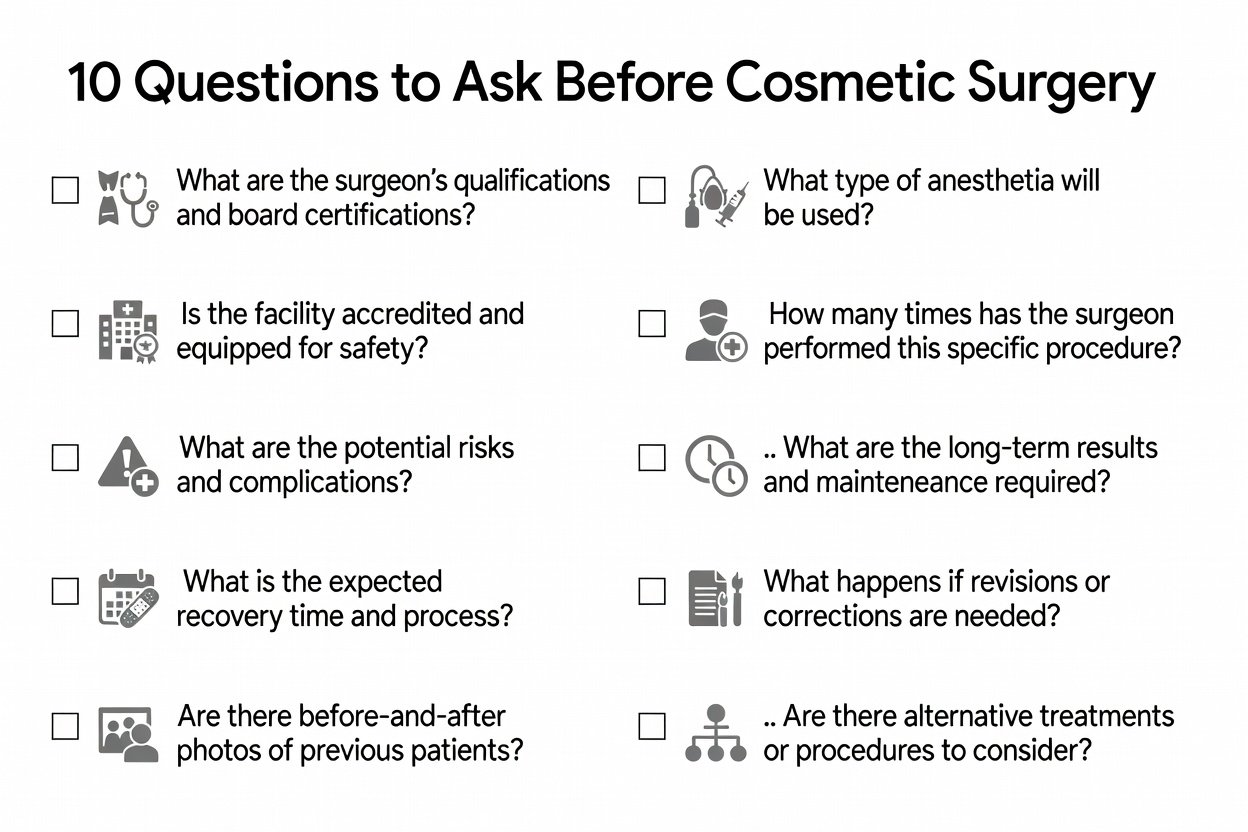
Printable Question Checklist
- Surgeon credentials and procedure-specific experience?
- Facility accreditation details and audit frequency?
- Emergency protocol documentation and response times?
- Full itemized cost breakdown with inclusions?
- Recovery assistance timeline and daily support?
- Aftercare coordination plan with home-country physicians?
- Revision and complication policies in writing?
- Recent patient references available?
- Travel and accommodation support inclusions?
- Safety screening and informed consent processes?
Print this checklist and note detailed responses during each consultation for side-by-side comparison.
FAQ
What if a clinic refuses to answer these questions?
View refusal as a major warning sign and immediately explore other providers. Transparency is non-negotiable for safe medical tourism.
How long should recovery support last abroad?
Most patients require at least 7–14 days of on-site monitoring depending on procedure complexity, with clear escalation paths for emergencies.
Are revision policies standard across countries?
Policies vary significantly by clinic and jurisdiction; always secure written agreements before travel.
Can I combine multiple procedures in one trip?
While some clinics accommodate combined surgeries, safety considerations often recommend staging procedures to reduce risks.
What should I do if complications arise after returning home?
Contact both the overseas clinic and your local physician immediately, and retain all medical documentation for potential claims.
Conclusion
Asking these ten questions systematically empowers patients to select safer, more reliable options for cosmetic surgery travel. Thorough vetting protects both physical health and financial investment while improving satisfaction with results. For additional authoritative guidance on international healthcare standards and patient safety, consult resources from the World Health Organization and the Centers for Disease Control and Prevention. Prioritize verified credentials, transparent communication, and robust aftercare over convenience or marketing promises to achieve the best possible outcome in 2026.


No comments yet. Be the first!