 Veda Tour

Introduction to Ayurvedic Solutions for Low Energy
Chronic low energy affects millions seeking sustainable alternatives to caffeine or stimulants. Ayurveda, the ancient Indian system of medicine, offers holistic methods focused on dosha balance and lifestyle alignment. This guide draws from Vedic healing traditions practiced across India in 2026, emphasizing natural vitality restoration without quick fixes. Rooted in texts like the Charaka Samhita, Ayurveda views energy as ojas, the essence of immunity and vitality. Imbalances in vata or kapha doshas commonly cause fatigue. By identifying these and applying targeted herbs, routines, and diet, individuals can experience lasting improvements that support overall well-being rather than masking symptoms temporarily.
Many people turn to Ayurveda after experiencing burnout from modern lifestyles involving irregular schedules, processed foods, and high stress. The approach prioritizes prevention and personalization, making it suitable for beginners exploring natural energy boosts. In practice, practitioners assess physical, mental, and emotional states to create tailored plans that restore balance gently over time.
Understanding Dosha Imbalances Linked to Fatigue
Vata dosha governs movement and when elevated leads to restlessness, irregular sleep, and exhaustion. Common signs include cold hands and feet, anxiety, constipation, and a scattered mind that struggles to focus. Kapha imbalance manifests as heaviness, sluggishness, and prolonged tiredness, often accompanied by weight gain, congestion, and resistance to change. Pitta issues are less common for pure low energy but can contribute if inflammation is present, showing as irritability or digestive heat.
Assessment begins with self-observation of symptoms like dry skin for vata or weight gain for kapha. Keep a simple journal noting energy patterns throughout the day, sleep quality, and digestion. Professional pulse diagnosis from a vaidya provides deeper insight, revealing subtle imbalances not obvious from surface symptoms alone. For example, a person with high vata might feel wired yet tired after coffee, while kapha types experience post-meal lethargy that lasts hours.
Recommended Herbs for Boosting Vitality
Ashwagandha stands out as a primary adaptogen that calms the nervous system and supports adrenal function. Typical use involves 300-600mg standardized extract daily, often with warm milk at bedtime to promote restful sleep. Other options include shatavari for women seeking hormonal support and brahmi for mental clarity during demanding days. These can be prepared as teas, powders mixed into smoothies, or capsules for convenience.
These herbs work gradually, building resilience over weeks rather than providing instant stimulation. Combine ashwagandha with ginger for better absorption in vata types or with turmeric for kapha individuals needing metabolic support. Always source high-quality, organic herbs from reputable suppliers to ensure purity and potency.
Daily Routines and Dinacharya Practices
Establishing consistent rhythms aligns the body with natural cycles. Wake before sunrise, practice gentle yoga or abhyanga self-massage with sesame oil, and follow meals at regular times. Evening wind-down includes herbal teas and avoiding screens to protect melatonin production. Morning oil pulling with sesame or coconut oil freshens breath and supports detoxification while reducing vata dryness.
These adjustments stabilize energy by reducing vata aggravation from irregular schedules. A sample morning sequence starts with tongue scraping, followed by warm water with lemon, then 15 minutes of sun salutations. Evening practices might involve alternate nostril breathing to calm the mind before bed, helping prevent the 3 a.m. wake-ups common in imbalanced individuals.
Simple Dietary Shifts for Sustained Energy
Focus on warm, cooked foods like khichdi, spiced with cumin and ginger. Incorporate ghee, almonds soaked overnight, and seasonal fruits. Reduce cold, heavy, or processed items that increase kapha. A typical breakfast could be spiced oatmeal with cardamom and raisins, while lunch features a vegetable stew with quinoa and fresh herbs.
Hydration with cumin-coriander-fennel tea supports digestion and prevents energy dips. Avoid skipping meals or eating late at night, as both disrupt agni, the digestive fire essential for nutrient absorption and vitality. Experiment with one change at a time, such as adding a midday snack of warm milk with saffron, to observe how it affects afternoon energy levels.
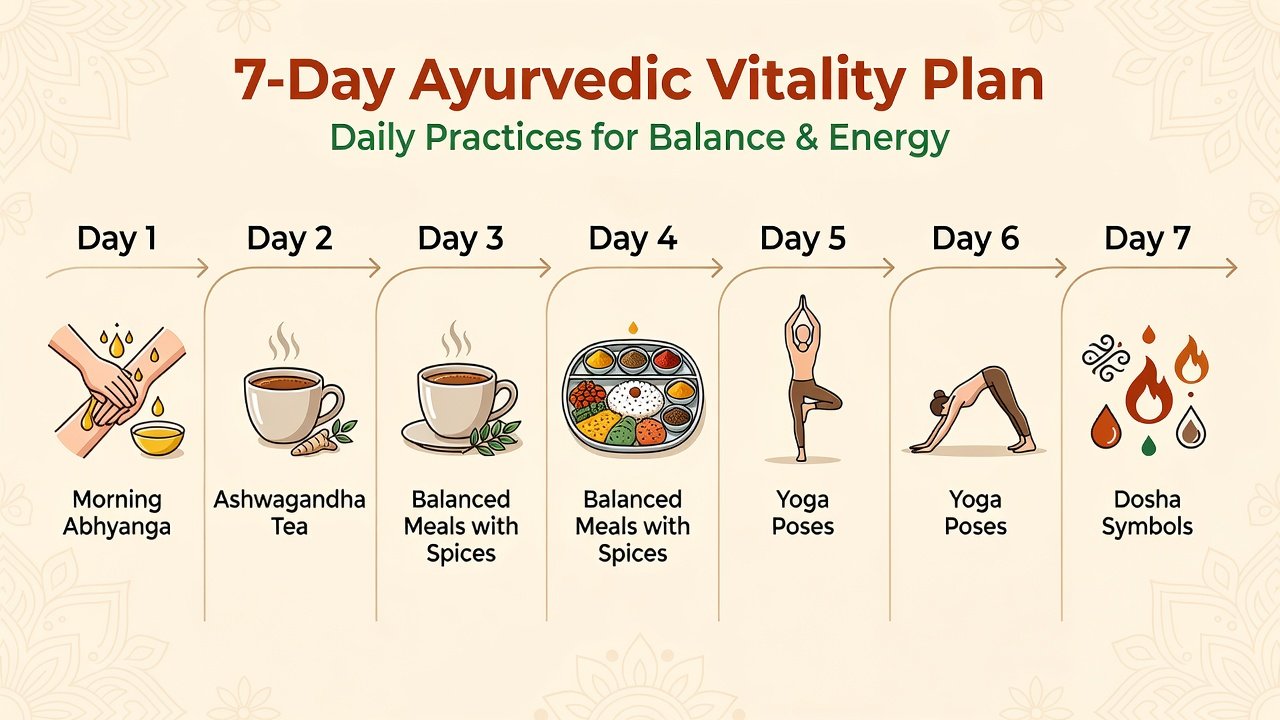
Step-by-Step 7-Day Vitality Plan
This beginner plan integrates the above elements progressively with built-in tracking.
- Day 1-2: Start with ashwagandha tea and abhyanga. Focus on identifying your dominant dosha through journaling symptoms and noting energy fluctuations after each meal.
- Day 3-4: Introduce warm spiced breakfasts and 20 minutes of walking after lunch. Add brahmi for focus during work hours and compare how you feel versus previous stimulant use.
- Day 5-6: Build full dinacharya including oil pulling and early bedtime by 10 p.m. Prepare sample meals like ginger-infused soup for dinner and track improvements in morning alertness.
- Day 7: Review progress and adjust based on responses, emphasizing rest and light meals. Incorporate a short pranayama session and plan ongoing habits like weekly self-massage.
Practical examples include preparing overnight oats with cardamom on busy mornings or using triphala for gentle detoxification at week's end. Track daily energy on a 1-10 scale to see patterns emerge clearly.
Comparisons of Common Ayurvedic Remedies
Ashwagandha excels for vata-related anxiety fatigue while kapha benefits more from ginger and turmeric infusions that stimulate metabolism. Versus modern supplements, Ayurvedic options emphasize whole-plant synergy and fewer side effects when used correctly under guidance. For instance, synthetic energy boosters may cause crashes, whereas these natural approaches build cumulative strength. Individuals often find combining two remedies, such as ashwagandha at night and triphala in the morning, yields better results than single herbs alone.
Expert Tips from Vedic Healing Traditions
Vedic practitioners stress seasonal alignment and pranayama breathing for prana circulation. Combine with marma point stimulation for targeted energy flow, such as pressing the point between the eyebrows for mental refreshment. Consistency trumps intensity, with results typically visible in 3-6 weeks of steady practice. Avoid overexertion during the plan and listen to bodily signals, adjusting intensity based on daily constitution. Many experts recommend consulting local Ayurvedic centers in India for personalized guidance during wellness journeys.
Frequently Asked Questions
Is Ayurvedic treatment safe for everyone?
Generally yes when personalized, but consult a qualified practitioner especially if pregnant or on medication. Start with small doses to monitor tolerance and discontinue if any discomfort arises.
How long until I see results?
Initial improvements in sleep and digestion appear within 7-14 days, with sustained energy building over a month of adherence. Full vitality restoration may take 6-8 weeks depending on imbalance severity.
Can I combine this with conventional medicine?
Many do successfully, but disclose all approaches to avoid interactions. Resources like Mayo Clinic discuss integrative options for complementary care.
What if my energy issues persist?
Rule out underlying conditions; Ayurveda complements diagnostics from sources such as National Library of Medicine. Consider professional evaluation if symptoms continue beyond four weeks.
Are there any lifestyle mistakes to avoid?
Common pitfalls include irregular sleep, excessive screen time before bed, and skipping meals. Correct these gradually rather than attempting radical overhauls that increase stress.
Conclusion
Ayurveda provides a time-tested framework for addressing low energy through dosha-specific strategies. By embracing these Vedic principles in daily life, sustainable vitality becomes achievable. Begin with one change today and build from there for transformative results in 2026 and beyond. Continued practice fosters not only higher energy but also greater resilience and inner balance.


No comments yet. Be the first!