 Veda Tour

Introduction to Ayurvedic Sinus Relief
Sinus issues affect millions seeking natural solutions beyond conventional medicine. In India, Vedic healing practices rooted in Ayurveda offer time-tested methods for balancing the body. This guide explores how to address sinus congestion by pacifying kapha dosha and igniting agni, the digestive fire, using traditional approaches popular in 2026. Ayurveda views sinus problems as excess kapha leading to mucus buildup. Strengthening agni helps clear these blockages naturally. Many turn to these methods for holistic wellness, drawing from ancient texts and modern practitioner insights. The approach emphasizes personalized care based on individual constitution, seasonal changes, and lifestyle factors common in urban and rural India alike.
By integrating daily routines with herbal support, individuals often experience reduced inflammation and improved respiratory function. This comprehensive method goes beyond symptom management to address underlying imbalances that conventional treatments sometimes overlook.
Understanding Kapha Dosha and Agni in Sinus Health
Kapha dosha governs structure and lubrication in the body. When imbalanced, it causes sticky mucus and sinus pressure. Agni, the metabolic fire, ensures proper digestion and elimination. Weak agni allows toxins to accumulate, worsening sinus conditions. Practitioners recommend daily routines to restore balance. For example, one Ayurvedic doctor in Kerala shares how patients reduced chronic sinusitis by focusing on kapha-pacifying habits over six weeks. In Vata-pitta types, sinus issues may present differently with dryness alongside congestion, requiring tailored adjustments like added warming spices.
Monitoring tongue coating and digestion provides early indicators of agni strength. Seasonal shifts in India, such as monsoon humidity, demand extra vigilance to prevent kapha accumulation in the sinuses and chest.
Key Herbs for Sinus Relief: Tulsi and Ginger
Tulsi, or holy basil, acts as a powerful decongestant and immune booster. Fresh tulsi leaves brewed into tea help clear nasal passages. Ginger warms the body, reduces inflammation, and supports agni. Combine both in a daily decoction for optimal results. Other supportive herbs include turmeric for its anti-inflammatory curcumin and black pepper to enhance bioavailability. Prepare a simple tulsi-ginger tea by boiling five leaves and one inch of fresh ginger in two cups of water for ten minutes, then strain and sip warm twice daily.
Practitioners in Rajasthan often add licorice root for soothing throat irritation associated with post-nasal drip. Always source organic varieties from trusted Indian suppliers to ensure potency and purity.
Daily Nasal Routine: Nasya Oil Application
Nasya involves applying medicated oils into the nostrils to lubricate and cleanse sinuses. Use sesame or anu taila oil. 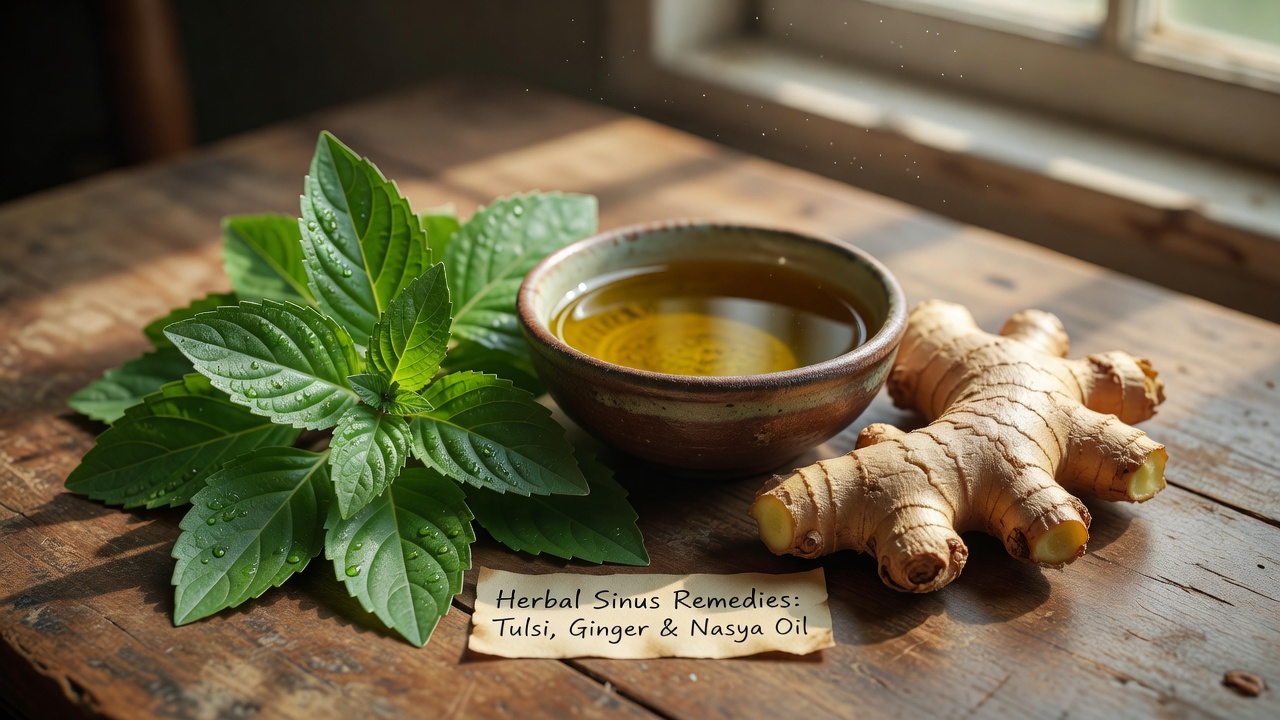
Step-by-step protocol: Lie down with head tilted back. Place 3-5 drops of warm oil in each nostril. Inhale gently and rest for 10 minutes. Perform this each morning after brushing teeth. Consistency yields noticeable improvements in breathing within two weeks. Variations include evening applications with brahmi oil for stress-related congestion. Avoid nasya during acute infections or immediately after meals.
Dietary Adjustments to Support Agni
Focus on warm, light foods that reduce kapha. Include soups, spiced vegetables, and herbal teas. Avoid dairy, cold drinks, and heavy sweets that increase mucus. A sample daily menu starts with warm ginger water upon waking, followed by a breakfast of spiced oatmeal with cumin. Lunch features lentil soup with turmeric and coriander, while dinner consists of steamed vegetables and quinoa before 7 PM. Incorporate cumin, coriander, and fennel seeds in meals to kindle agni. A Bangalore professional noted fewer sinus flare-ups after adopting this pattern for one month, combined with reduced screen time before bed.
- Start the day with warm ginger water.
- Incorporate cumin, coriander, and fennel seeds in meals.
- Eat dinner by 7 PM to allow proper digestion overnight.
- Snack on roasted cumin seeds instead of processed foods.
Breathing Exercises for Sinus Clearance
Pranayama techniques enhance lung capacity and clear nasal passages. Try alternate nostril breathing (nadi shodhana) daily for 10 minutes. Sit comfortably with spine straight. Close right nostril, inhale through left. Close left, exhale through right. Repeat for 5-10 cycles. Add kapalabhati for gentle detoxification, performing 20 rapid abdominal pumps followed by normal breathing. These exercises complement nasya for faster relief and can be practiced outdoors in fresh morning air common across Indian wellness centers.
- Sit comfortably with spine straight.
- Close right nostril, inhale through left.
- Close left, exhale through right.
- Repeat for 5-10 cycles.
- End with three rounds of deep diaphragmatic breaths.
Step-by-Step Home Protocols
Combine the elements into a routine: Morning nasya, herbal tea, pranayama, and evening light dinner. Track symptoms in a journal. Adjust based on body response under guidance from a qualified practitioner. Begin with a three-day cleanse using warm water and lemon to reset agni before introducing herbs.
Before-and-After Comparisons with Conventional Options
Conventional treatments like decongestants provide quick but temporary relief, often with side effects. Ayurvedic methods address root causes for lasting balance. Patients often note sustained energy and fewer recurrences compared to antibiotic courses. For more on traditional medicine integration, see World Health Organization resources.
Real-Life Examples from Ayurvedic Practitioners
In Pune, a vaidya treated a software engineer with chronic sinusitis using tulsi-ginger protocols and nasya. After 30 days, symptoms reduced by 80 percent. Another case in Rajasthan involved a teacher who combined diet changes with breathing exercises for complete relief. A Delhi family reported their child experienced fewer seasonal allergies after incorporating daily nasya under supervision.
Mistakes to Avoid
Common pitfalls include inconsistent routines, using cold oils for nasya, or ignoring dietary triggers like excessive sweets. Overdoing pranayama without proper guidance can irritate sensitive sinuses. Always consult a certified Ayurvedic physician before starting, especially if on medications.
FAQ Section
Is Ayurvedic sinus treatment safe?
Yes, when followed correctly with professional advice. Start slowly to monitor reactions.
How long until results appear?
Many notice improvements in 7-14 days, with full benefits in 4-6 weeks of consistent practice.
Can it replace medical care?
Use as a complement. Consult doctors for severe cases. Learn more at National Center for Biotechnology Information.
What if symptoms persist?
Reassess with a practitioner and consider diagnostic tests. Additional therapies like steam inhalation with eucalyptus may help.
Are there age restrictions?
Suitable for most adults; children require modified protocols under expert care.
Conclusion
Ayurvedic sinus relief through Vedic practices empowers natural healing. By balancing kapha and strengthening agni with herbs, nasya, diet, and exercises, individuals in India and beyond achieve lasting wellness in 2026. Begin your journey today for clearer breathing and better health.


No comments yet. Be the first!