 Veda Tour

Introduction to Ayurvedic Dinacharya
Ayurveda, the traditional system of medicine from India, emphasizes preventive care through daily routines known as Dinacharya. These Vedic practices align the body with natural cycles to promote overall well-being, balance the three doshas (Vata, Pitta, and Kapha), and prevent disease. In 2026, many in India and beyond are turning to these methods for holistic health amid modern stressors. Dinacharya involves structured activities from dawn to dusk, focusing on cleansing, nourishment, movement, and rest. Beginners can start with core rituals and gradually build consistency for lasting benefits. This approach draws from ancient texts like the Charaka Samhita and supports the body's natural rhythms rather than fighting them.
The practice is particularly valuable in India's diverse climate and urban lifestyles, where irregular schedules often disrupt health. By following Dinacharya, individuals report improved immunity, mental clarity, and energy levels. It serves as a foundational Ayurvedic treatment for those seeking preventive Vedic healing methods without relying solely on medications.
Morning Rituals: Starting the Day with Intention
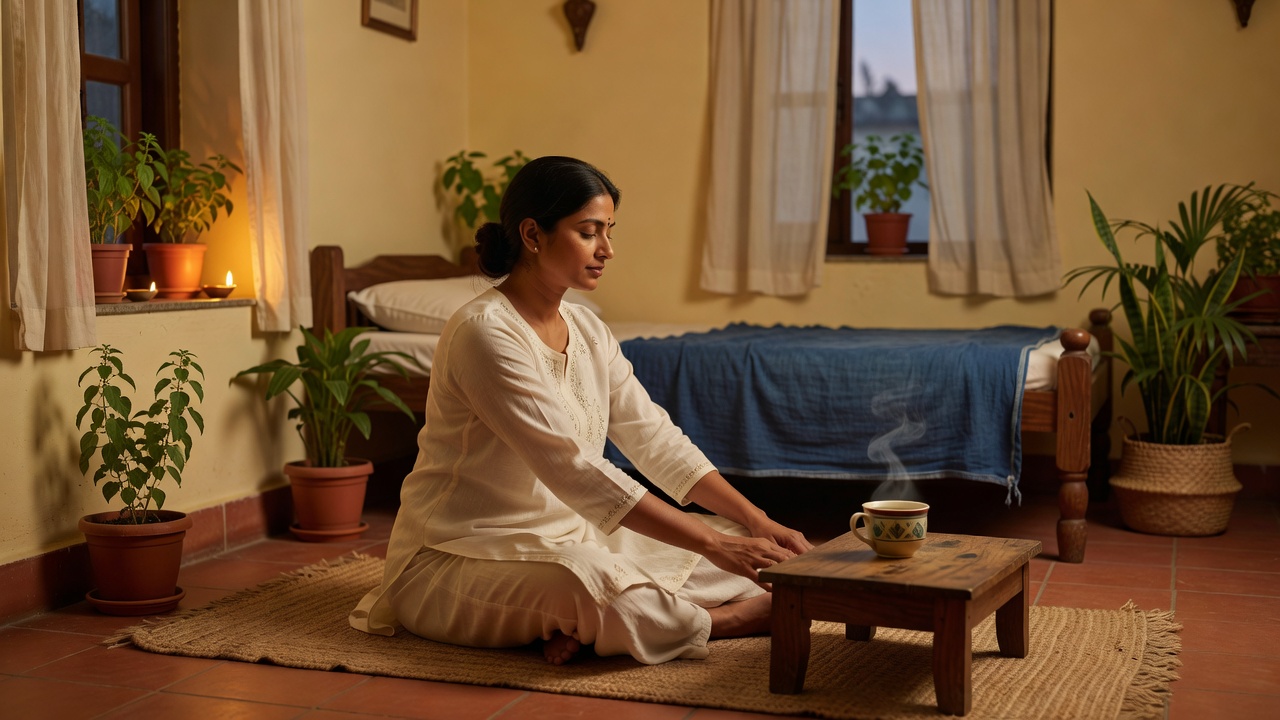
The morning sets the tone for dosha balance. Begin by waking before sunrise, ideally around 5-6 AM, to harness the Kapha energy of early hours. This timing helps clear Kapha accumulation that occurs during sleep. Upon waking, practice gratitude or a short prayer to center the mind.
Key morning steps include:
- Oil Pulling: Swish a tablespoon of sesame or coconut oil in your mouth for 10-15 minutes to detoxify and strengthen gums while reducing oral bacteria.
- Tongue Scraping: Use a copper scraper to remove toxins accumulated overnight, improving taste perception and digestion.
- Abhyanga (Self-Massage): Warm sesame oil and massage the body in circular motions for 10 minutes before bathing to nourish skin and calm the nervous system.
- Hygiene and Elimination: Drink warm water with lemon or ginger to stimulate digestion and promote natural bowel movements.
- Neti and Eye Washing: Use a saline solution for nasal irrigation and splash cool water on the eyes to refresh senses.
These steps cleanse the senses and prepare the body for the day. Real-life example: A software professional in Bangalore incorporated oil pulling and abhyanga, reporting improved energy and reduced morning stiffness within three weeks. Another example from a Delhi resident showed that consistent tongue scraping helped alleviate chronic bad breath caused by irregular eating habits.
Diet Timing and Nourishment Principles
Ayurveda stresses eating according to the sun's cycle for optimal Agni or digestive fire. The largest meal should be at lunch when Agni peaks between 10 AM and 2 PM. Breakfast remains light, such as warm porridge or spiced milk, while dinner occurs before 7 PM and stays simple to avoid overburdening digestion during evening Kapha time.
Focus on fresh, seasonal foods suited to your dosha. For example, Vata types benefit from warm soups and ghee-rich meals to ground their airy nature, while Pitta individuals favor cooling fruits, cucumbers, and coconut water. Kapha types should emphasize light grains and spices like ginger to counter heaviness. Hydration with herbal teas such as cumin-coriander-fennel supports detoxification throughout the day. Practical tip: Prepare meals mindfully, avoiding screens during eating, and chew thoroughly to enhance nutrient absorption.
Integrating Yoga and Movement
Yoga complements Dinacharya by enhancing flexibility, circulation, and mental clarity. Morning sessions of 20-30 minutes, including Surya Namaskar and asanas like Tadasana, Bhujangasana, and forward bends, help regulate doshas. Evening gentle stretches such as child's pose or legs-up-the-wall calm Vata and prepare for restful sleep.
Those new to the practice can follow guided routines from certified instructors or apps rooted in traditional methods. Benefits include better posture, reduced stress, and improved respiratory function. This integration aligns with broader wellness approaches recognized by organizations like WHO. A real-life case involved a Pune student who added daily yoga to her Dinacharya and experienced fewer menstrual irregularities linked to Pitta imbalance.
Evening Wind-Down Practices
As the day ends, shift to calming activities that support Kapha and reduce accumulated stress. Avoid screens after sunset and opt for reading spiritual texts or light journaling. A warm bath with Epsom salts or herbal oils such as lavender aids relaxation and skin detoxification.
Step-by-step evening guide: Reflect on the day with gratitude journaling, practice 10 minutes of alternate nostril breathing, apply calming oils to feet and temples, and maintain a dark, cool sleep environment free from electronics. Aim for bedtime by 10 PM to align with natural melatonin rhythms. This routine prevents Vata aggravation that leads to insomnia and anxiety.
Benefits for Dosha Balance and Real-Life Examples
Consistent Dinacharya stabilizes Vata (movement and creativity), Pitta (transformation and metabolism), and Kapha (structure and immunity). Users often experience better digestion, sustained energy, emotional equilibrium, and fewer seasonal allergies. A Mumbai teacher shared how evening routines reduced her anxiety and improved sleep quality significantly within a month. In another account, a Chennai retiree balanced his Kapha-dominant constitution through timed meals and abhyanga, losing excess weight naturally without strict diets.
Common Challenges and Solutions
Many beginners face hurdles when adopting Dinacharya. Time constraints can be addressed by starting with just oil pulling and warm water, adding one ritual weekly. Unknown dosha type requires consulting an Ayurvedic practitioner or taking a simple online assessment for personalization. Modern schedules can be adapted flexibly while maintaining the core sequence of cleanse-nourish-move-rest. Resistance to early rising often fades after two weeks as circadian rhythms adjust.
Customizing Dinacharya for Different Lifestyles
Urban professionals may shorten morning routines but keep key elements like tongue scraping. Rural practitioners in India often extend outdoor walks during sunrise. Women can adjust for menstrual cycles by favoring restorative poses. Families benefit from shared evening meals to strengthen bonds alongside health gains.
Potential Mistakes to Avoid
Common errors include skipping meals at proper times, using cold water in the morning which dampens Agni, or overexerting in yoga without listening to the body. Always choose oils and foods based on current season and personal constitution rather than trends.
Long-Term Impact in 2026
Over months and years, Dinacharya builds resilience against lifestyle diseases prevalent in India. It promotes sustainable wellness that complements modern medicine, as noted in resources from NCCIH and traditional medicine databases.
Conclusion
Embracing Ayurvedic Dinacharya offers a timeless path to health rooted in India's Vedic heritage. With dedicated practice, these routines foster resilience and vitality for years to come, making preventive care accessible to everyone.

No comments yet. Be the first!