 Veda Tour

Introduction: Navigating Legal Risks in Combined Ayurveda and Medical Tourism
Combining traditional Ayurveda treatments with modern procedures like hair transplants and dental implants is an increasingly popular option for medical tourists in 2026. This fusion appeals to those seeking holistic recovery alongside surgical interventions, yet it introduces complex regulatory challenges that span multiple legal systems. Beginners researching these journeys must prioritize legal compliance to avoid costly disputes, denied insurance claims, incomplete treatments, or even unsafe medical outcomes. This comprehensive guide examines five critical pitfalls in detail, offering expanded practical verification steps, destination comparisons across India, Thailand, and Turkey, real-world mistake examples, decision-making frameworks, and an in-depth FAQ section focused on insurance claims and dispute resolution.
Understanding 2026 legal updates is essential because regulations have tightened significantly in popular hubs. Governments are responding to the surge in hybrid wellness and surgical tourism by enforcing stricter patient protections, mandatory disclosures, and cross-border accountability measures. Failing to address these issues upfront can turn an anticipated healing journey into a legal and financial nightmare.
Pitfall 1: Visa and Insurance Requirements
Many travelers overlook that standard medical visas often exclude complementary Ayurveda sessions when paired with invasive procedures. In 2026, countries like India require separate endorsements or specific wellness visas for integrated treatments under updated e-visa frameworks. Insurance policies frequently deny coverage for non-surgical Ayurveda elements if they are bundled with implants or transplants, classifying them as elective or unproven therapies.
Practical steps to verify compliance:
- Review official embassy and consulate websites for the latest medical visa clauses that explicitly address combined traditional and surgical care.
- Contact your insurance provider in writing to request confirmation that Ayurveda components are covered under any medical tourism rider, including details on pre-authorization requirements.
- Consult a cross-border health law specialist at least 60 days before travel to review your specific itinerary and documentation.
- Maintain digital and physical copies of all approvals, including email confirmations and policy amendments.
Common mistake example: A patient from Europe assumed a standard tourist visa covered their full package in India, only to have Ayurveda sessions halted by authorities, forcing an early departure and loss of deposits. Destination comparison shows India offers clearer integrated visa pathways than Thailand, where wellness add-ons often require separate tourist visa extensions, while Turkey emphasizes medical visa categories that rarely accommodate traditional medicine overlays.
Pitfall 2: Clinic Licensing Standards
Not every facility offering Ayurveda alongside hair transplants or dental implants holds proper dual accreditation. Updated 2026 standards from international bodies now mandate separate licenses for traditional medicine wings, with rigorous audits for herb sourcing, sterilization protocols, and staff qualifications.
Compare top destinations: India’s National Accreditation Board for Hospitals and Healthcare Providers enforces some of the strictest rules for Ayurveda integration, requiring documented evidence of compatibility with surgical procedures. Thailand’s licensing focuses more on cosmetic dental standards with lighter oversight for herbal treatments, creating potential gaps. Turkey aligns closely with European Union directives for dental implants but applies less stringent checks on Ayurvedic elements.
World Health Organization guidelines on traditional and complementary medicine provide an authoritative global benchmark. Always request copies of both medical and wellness licenses during initial consultations and verify them directly with issuing authorities.
Real-world example: In late 2025, a traveler underwent dental implants in Thailand only to discover the attached Ayurveda center operated without dual licensing, resulting in treatment suspension and complications from unmonitored herbal interactions.
Pitfall 3: Patient Rights Contracts
Contracts in this niche frequently favor providers, especially regarding informed consent for potential interactions between Ayurvedic herbs and surgical implants. 2026 regulations in leading destinations now require explicit clauses covering side effects, termination rights, refund schedules, and data privacy for medical records shared across borders.
Review every contract with an independent attorney. Look for clear language on what happens if complications arise from the combined approach and ensure you retain copies in both English and the local language.
Pitfall 4: Cross-Border Liability Issues
Determining liability when complications occur from Ayurveda-hair transplant or dental combinations can involve multiple jurisdictions, complicating lawsuits or compensation claims. Patients may face barriers without pre-agreed arbitration mechanisms or reciprocal legal agreements between countries.
India has strengthened patient recourse options through updated consumer protection laws, while Thailand relies more on mediation centers. Turkey offers stronger protections under its medical tourism regulations but requires patients to navigate complex international treaties. U.S. Department of State travel advisories and similar government resources from other nations offer current insights into liability environments.
Example: A Canadian patient experienced infection after returning from India and struggled to pursue claims because the contract lacked enforceable arbitration terms recognized in both countries.
Pitfall 5: Post-Treatment Follow-Up Laws
Returning home without legally binding follow-up protocols risks serious complications, especially with implants that require monitoring. 2026 laws increasingly mandate documented aftercare plans, including telemedicine reporting requirements for overseas patients who received Ayurvedic adjunct therapies.
Confirm that your clinic provides a detailed aftercare agreement enforceable in your home country and coordinate with a local physician for ongoing oversight before departure.
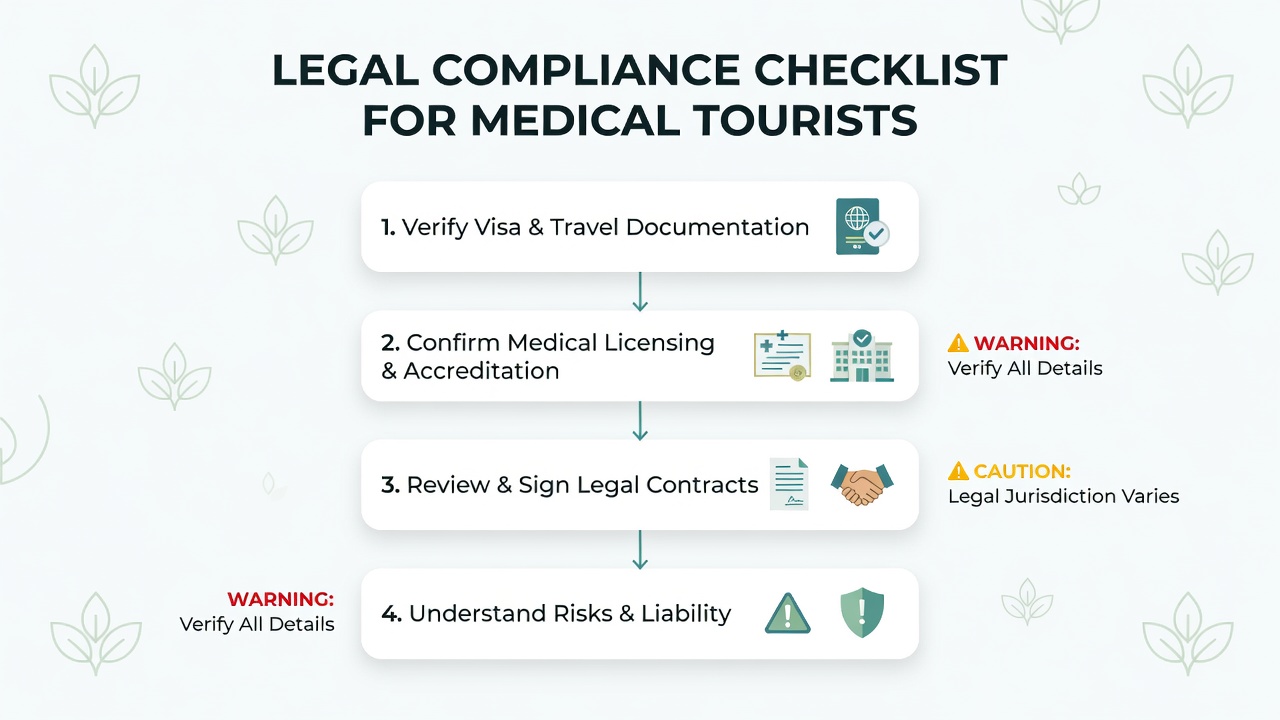
Comprehensive Verification Checklist for Safe Planning
- Obtain and verify all required visas and insurance endorsements at least eight weeks in advance.
- Request and independently validate dual licensing documentation for every facility involved.
- Have contracts reviewed by a qualified international health lawyer.
- Establish clear liability and arbitration clauses in writing.
- Secure written post-treatment follow-up commitments and share them with your home healthcare provider.
- Research destination-specific 2026 regulatory updates through official government portals.
- Document all communications and retain records for at least three years post-treatment.
Conclusion
By thoroughly addressing these five legal pitfalls with the practical steps and comparisons outlined above, medical tourists can significantly reduce risks when pursuing Ayurveda-integrated hair and dental procedures in 2026. Proactive verification and professional guidance remain the most effective safeguards for a safe and successful experience.
FAQ: Insurance Claims and Dispute Resolution
- How do I file an insurance claim for hybrid treatments? Compile comprehensive treatment logs, provider licenses, consent forms, and medical records, then submit them promptly according to your policy’s timelines while keeping copies of all correspondence.
- What if a dispute arises across borders? First attempt internal mediation through the clinic, then pursue arbitration if specified in your contract, or consult your national consumer protection agency for guidance on international medical tourism complaints.
- Can I switch providers mid-treatment if issues emerge? Review contract termination clauses carefully; many 2026 agreements allow this under specific conditions but may impose financial penalties.
- Are there government resources for dispute support? Yes, agencies such as those referenced by the Centers for Disease Control and Prevention travel health resources often provide guidance on medical tourism protections and reporting mechanisms.
No comments yet. Be the first!