 Veda Tour

Introduction to Seasonal Ayurvedic Adjustments in Wellness Travel
Wellness travel continues to grow in popularity as more individuals seek holistic approaches to health that combine ancient traditions with contemporary journeys. Ayurvedic medicine, rooted in balancing the three doshas—Vata, Pitta, and Kapha—offers a powerful framework for adapting to seasonal shifts while traveling. In 2026, travelers can optimize their experiences by aligning daily habits with climate variations at their destinations. This comprehensive guide delivers location-specific advice to maintain dosha equilibrium, prevent imbalances, and enhance overall healing outcomes during wellness trips.
Seasonal changes directly influence digestion, energy levels, sleep, and emotional stability. Ignoring these triggers can lead to fatigue, digestive issues, or heightened stress, undermining the benefits of a retreat or journey. By proactively adjusting routines, selecting targeted herbs, and incorporating appropriate therapies, travelers achieve deeper restoration. This approach integrates seamlessly with wellness travel programs focused on yoga, meditation, and natural therapies.
Identifying Seasonal Triggers for Dosha Balance
Begin any wellness trip by evaluating your primary dosha through self-assessment quizzes or consultation with an Ayurvedic practitioner. Observe personal indicators such as skin texture changes, appetite fluctuations, and mood responses to weather. Spring often brings excess Kapha due to increased moisture and pollen, manifesting as congestion or sluggishness. Summer heightens Pitta through intense heat and sun exposure, potentially causing inflammation or irritability. Winter aggravates Vata with dryness and cold winds, leading to dry skin, anxiety, or joint discomfort.
Real-world examples illustrate these effects. A spring visit to a temperate forest retreat may require extra detoxification focus, whereas a summer coastal escape demands cooling measures. Winter mountain getaways call for grounding practices. Maintain a simple travel log comparing symptoms to daily weather and altitude to refine adjustments over time. This proactive identification prevents common pitfalls and sets the foundation for customized plans.
Customizing Daily Routines for Travel
Adapting dinacharya, the Ayurvedic daily routine, ensures consistency across climates. Core elements include waking early, tongue scraping, oil pulling, and timed meals, but specifics shift seasonally. In spring, emphasize light, stimulating activities like brisk walks after sunrise. Summer routines incorporate midday shade time and cooling breathwork such as sheetali pranayama. Winter benefits from warm oil self-massage before bathing and earlier bedtimes.
Consider this step-by-step implementation for a spring wellness journey: First, hydrate with warm ginger-infused water upon waking. Next, perform 15 minutes of dynamic yoga to stimulate circulation. Follow with a breakfast of spiced oatmeal. Schedule main meals before 2 PM and conclude evenings with calming herbal infusions. For summer trips, add midday coconut water breaks and evening moon salutations. Winter schedules prioritize sesame oil massages and hearty vegetable stews at lunch. These modifications maintain energy and support dosha harmony throughout extended travel.
Selecting Herbs and Therapies for Seasonal Needs
Herbal choices and therapies must align with seasonal dosha needs. Turmeric and coriander cool Pitta during summer, while ashwagandha and ginger stabilize Vata in winter. Spring favors bitter herbs like neem for Kapha clearance. Therapies include Abhyanga full-body oil massage for winter dryness, Shirodhara for summer mental calm, and nasya nasal treatments for spring allergies. Source high-quality, organic products from certified wellness centers at your destination to avoid contaminants.
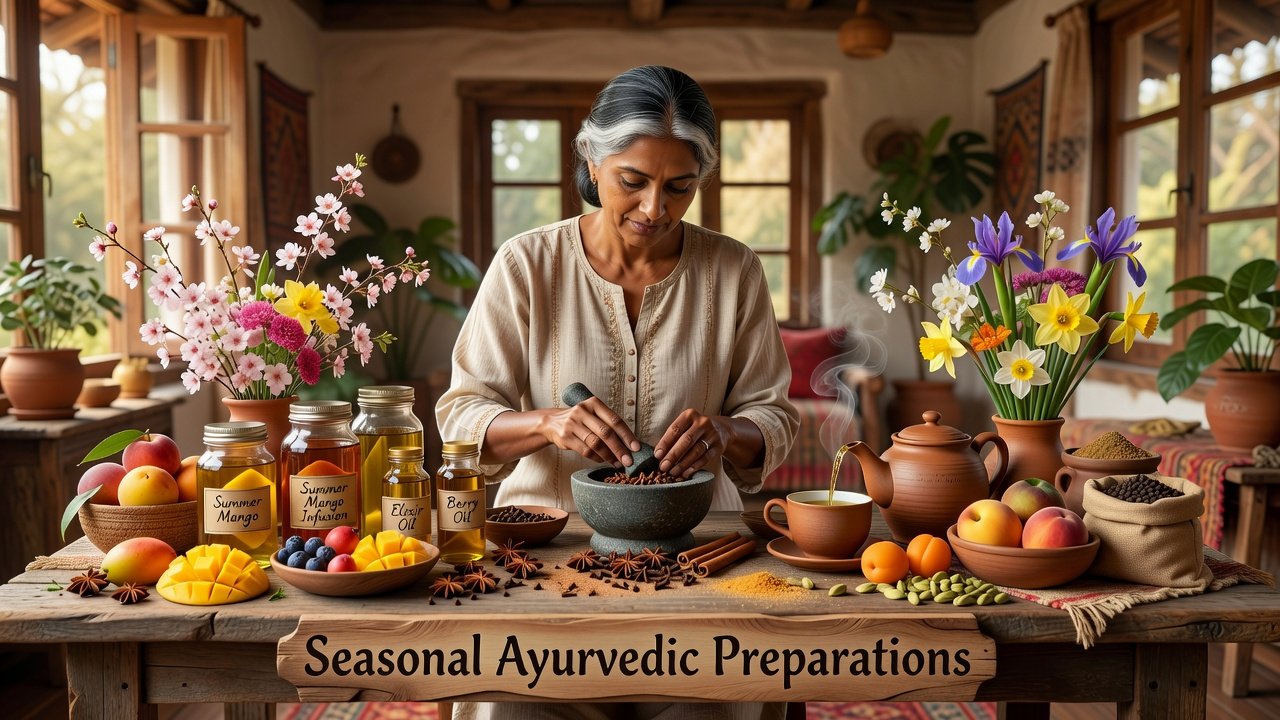
Travelers should research local availability in advance. Combine therapies with yoga sessions for amplified results. Authoritative guidance on herbal safety appears on sites such as National Institutes of Health and World Health Organization, which emphasize evidence-based integration of traditional practices.
Sample Adjustments for Spring, Summer, and Winter Trips
Detailed seasonal plans enhance practical application. For spring trips to blooming countryside locations, prioritize detox teas and light fasting one day per week while avoiding dairy. Summer beach or desert retreats require abundant hydration, aloe vera applications, and early morning activities only. Winter escapes to snowy or high-altitude areas benefit from warming spices in every meal, heavy blankets during rest, and restorative poses like child’s pose.
Comparisons of scenarios reveal key differences: urban wellness stays in spring need indoor air purification, while rural summer camps focus on shade structures. Winter city spa visits emphasize heated therapy rooms. These tailored examples demonstrate how small shifts compound into significant healing gains over a seven-to-ten-day trip.
Practical Implementation Steps and Common Mistakes
Prepare two weeks ahead by stocking travel kits with essential oils and teas. Test routines at home to identify what resonates. During travel, monitor progress daily and adjust as needed. Frequent errors include skipping hydration in arid zones, consuming heavy meals late at night, or neglecting rest periods. Avoid these by setting phone reminders and choosing accommodations with flexible wellness facilities. Integrating these practices with group classes at retreats multiplies benefits through shared accountability.
FAQ on Ayurvedic Travel Challenges
How does one manage jet lag using Ayurvedic methods? Consume triphala one hour before bed and gradually shift sleep by one hour daily prior to departure.
What if symptoms continue despite adjustments? Schedule an on-site consultation with a local Ayurvedic expert for personalized herb or therapy recommendations.
Are seasonal changes suitable for families or seniors? Yes, with scaled-down intensities and professional oversight for younger children or older adults.
Can these adjustments work alongside modern medical treatments? They complement many regimens but require coordination with healthcare providers for safety.
How long before results become noticeable? Most travelers observe improved digestion and mood within three to five days of consistent application.
Conclusion
Mastering seasonal Ayurvedic adjustments elevates wellness travel from simple relaxation to transformative holistic healing. Through careful trigger identification, routine customization, targeted herb and therapy selection, and scenario-specific planning, individuals sustain dosha balance regardless of destination climate. Apply these evidence-informed strategies throughout 2026 journeys to experience sustained vitality, mental clarity, and physical resilience long after returning home.

No comments yet. Be the first!