 Veda Tour

Introduction
Medical tourism for hair transplant procedures in Turkey has grown significantly, drawing patients from Europe, the Middle East, and beyond seeking advanced techniques at competitive facilities. While many travelers return home satisfied with natural-looking results, a notable number encounter complications stemming from rushed decisions and incomplete preparation. These issues often arise because individuals focus narrowly on one aspect of the process instead of taking a holistic view of the entire medical journey.
This article explores the five most frequent mistakes made by medical tourists in 2026. Each section includes real-world examples drawn from patient reports, detailed explanations of why the error occurs, and concrete steps to prevent it. By understanding these pitfalls, you can approach your hair transplant with greater confidence and reduce the likelihood of needing corrective work later. The information draws on established guidelines for safe international medical travel from sources such as the World Health Organization and the Centers for Disease Control and Prevention.
Mistake 1: Over-Relying on Price Alone
One of the most common errors involves selecting a clinic solely because it advertises the lowest rates. Patients often compare headline figures without examining what those figures actually cover or the qualifications behind them. In several documented cases, individuals booked procedures at facilities promising rock-bottom costs only to discover that the quoted price excluded essential medications, follow-up sessions, or even the surgeon’s direct involvement. The result was substandard graft placement, visible scarring, and the need for expensive revisions back home.
This mistake typically stems from the pressure to minimize upfront expenses without recognizing that hair restoration is a medical procedure rather than a commodity purchase. Low prices can signal shortcuts in sterilization protocols, inexperienced staff, or high-volume assembly-line operations that prioritize quantity over individualized care. To avoid this trap, begin by obtaining itemized quotes from at least four different clinics. Cross-reference each quote against the surgeon’s years of specialized experience and the clinic’s infection-control standards. Consider the total cost of travel, accommodation, and potential lost wages during recovery when evaluating value. Patients who invest time in this comparison process consistently report higher satisfaction rates and fewer complications.
Mistake 2: Skipping Surgeon Verification
Many travelers assume that any clinic advertising hair transplant services employs qualified physicians for every stage of the operation. In practice, some facilities delegate critical steps such as graft extraction and placement to technicians who lack formal medical training. Real-world examples include patients who discovered after the fact that their “surgeon” was present only for a brief consultation while the actual procedure was performed by assistants. This led to uneven hairlines, poor density, and in rare instances, nerve damage requiring additional medical intervention.
Verification is straightforward yet frequently overlooked. Request the full name and credentials of the surgeon who will perform your procedure, then confirm membership in professional organizations through official registries. Ask for case studies showing results on patients with similar hair loss patterns to yours, and insist on a video consultation where you can ask technical questions directly. Clinics that hesitate to provide this information or redirect you to sales staff should be treated with caution. Taking these verification steps adds only a few hours to the planning process but dramatically improves the odds of a successful outcome.
Mistake 3: Ignoring Travel Logistics
Underestimating the physical demands of international travel represents another frequent oversight. Patients sometimes schedule surgery for the same day they arrive in Turkey, arriving fatigued from long flights and time-zone changes. This increases the risk of excessive bleeding, swelling, and delayed healing because the body has not had time to adjust. One patient reported arriving after a 12-hour journey and undergoing extraction immediately, resulting in higher-than-expected shock loss that took months longer to resolve.
Effective planning begins with building buffer days into your itinerary. Arrive at least 48 hours before the scheduled procedure to allow for rest and any last-minute medical tests. Choose accommodation within a short distance of the clinic that offers quiet environments and easy access to pharmacies. Check entry requirements through official government resources and arrange travel insurance that explicitly covers medical complications abroad. The Mayo Clinic provides helpful general guidance on preparing for international medical procedures that can be adapted to hair restoration trips. Patients who treat travel logistics as seriously as the surgery itself experience smoother recoveries and fewer unexpected complications.
Mistake 4: Neglecting Long-Term Aftercare
Aftercare is often viewed as an afterthought once the grafts are placed, yet it determines the final appearance of the transplant. Patients frequently return home without clear instructions on washing routines, activity restrictions, or medication schedules. In one case, a traveler ignored the clinic’s advice against strenuous exercise for the first month and experienced significant graft displacement. Another patient failed to maintain scheduled virtual check-ins, missing early signs of infection that could have been managed remotely.
Reputable clinics provide written aftercare protocols and schedule follow-up video calls for at least the first year. Before booking, confirm exactly how many remote consultations are included and whether the clinic will coordinate with your local dermatologist if issues arise. Establish a daily care routine in advance and stock necessary supplies such as gentle shampoos and protective headwear. Patients who treat aftercare as an ongoing partnership rather than a one-time event achieve more consistent, natural-looking results over time.
Mistake 5: Choosing Unaccredited Clinics
Accreditation serves as an independent verification that a facility meets international standards for safety, hygiene, and staff qualifications. Some medical tourists bypass this check because they are unfamiliar with the organizations that issue certifications or because clinics downplay its importance. Cases have emerged where unaccredited clinics reused equipment improperly or lacked emergency protocols, forcing patients to seek urgent care at local hospitals.
Before committing, ask for proof of accreditation from recognized bodies and verify the status directly on the issuing organization’s website. Combine this with reviews from independent platforms that focus specifically on medical tourism experiences. Facilities that maintain transparent accreditation records and welcome questions about their safety measures demonstrate a commitment to patient protection that goes beyond marketing claims.
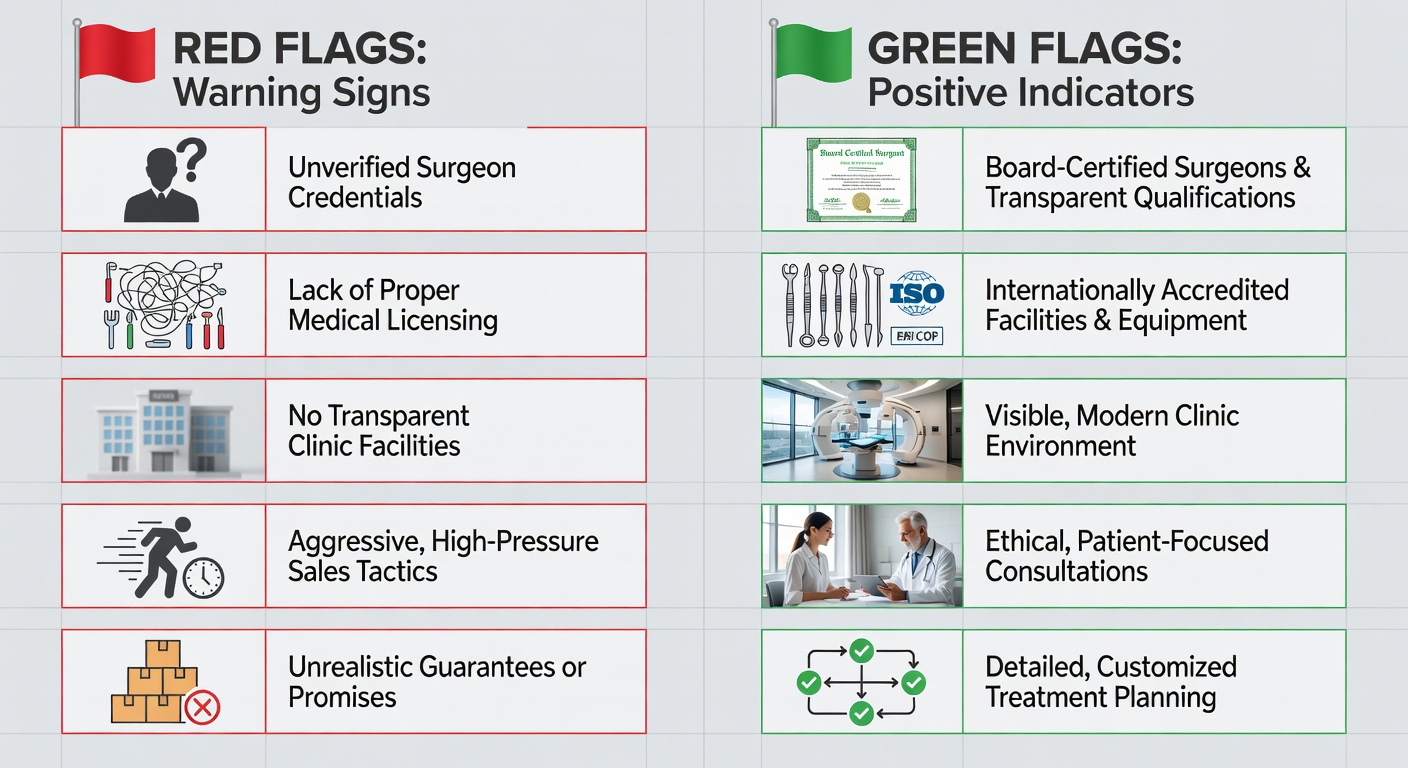
Red Flags Versus Green Flags When Evaluating Providers
Evaluating clinics becomes easier when you systematically compare warning signs against positive indicators. Red flags include vague answers about surgeon involvement, absence of documented accreditation, pressure tactics to book within 24 hours, and limited transparency about complication rates. Green flags encompass detailed pre-operative consultations, published surgeon biographies with verifiable credentials, structured aftercare programs, and consistent positive feedback from previous international patients across multiple review sites.
Create a simple checklist before contacting any provider. Note how quickly the clinic responds to questions, whether they offer a cooling-off period, and how willing they are to connect you with past patients. This structured approach prevents emotional decision-making and keeps the focus on objective quality markers.
Additional Preparation Strategies
Beyond avoiding the five core mistakes, successful medical tourists invest time in broader preparation. Review your current medications with both your home physician and the Turkish clinic to identify any interactions. Arrange for time off work that accounts for the full initial healing phase rather than the minimum suggested by marketing materials. Consider language support—while many clinics provide English-speaking staff, having translation apps ready for non-medical interactions reduces stress. Patients who document every conversation and retain copies of consent forms and aftercare instructions find it easier to address any concerns that surface after returning home.
FAQ
What happens if I need a refund after traveling?
Refund policies differ between clinics. Request the complete written policy before making any payment and clarify conditions related to cancellations, medical complications, or dissatisfaction with results. Keep records of all communications and payments.
How is follow-up care handled when returning home?
Established clinics schedule virtual appointments and provide written protocols. Confirm the number of included follow-ups and whether they will liaise with your local doctor if additional treatment is required.
Can I combine a hair transplant with other procedures during medical tourism?
Combining treatments is possible at experienced facilities, but it requires careful scheduling to allow adequate healing between procedures. Discuss all planned treatments during the initial consultation and verify that the clinic has protocols for multi-procedure patients.
Are there legal protections for medical tourists in Turkey?
Legal recourse varies and is often limited compared with domestic procedures. Focus on prevention through thorough vetting rather than relying on post-treatment legal options. Travel insurance with medical coverage provides an additional layer of protection.
Conclusion
Planning a hair transplant in Turkey offers access to skilled practitioners and modern techniques when approached thoughtfully. By avoiding over-reliance on price, verifying surgeon credentials, managing travel logistics, prioritizing aftercare, and selecting accredited clinics, you position yourself for the best possible results. Use the red-flag and green-flag framework as a practical decision tool and allocate sufficient time for research. Patients who treat every stage of the process with equal attention consistently report higher satisfaction and fewer complications. Start your planning early, ask detailed questions, and maintain realistic expectations throughout the journey.

No comments yet. Be the first!