 Veda Tour
Introduction: Enhancing Recovery After Dental Implants in Mexico
Medical tourists choosing Mexico for dental implants benefit from world-class care combined with cost-effective options. Proper nutrition plays a critical role in accelerating healing and supporting osseointegration, the process where the implant fuses with the jawbone. This guide provides 2026 best practices tailored for patients traveling to Mexico, focusing on diet to minimize complications and promote wellness during recovery. Following implant surgery, the body requires specific nutrients to reduce inflammation, build bone, and repair tissue. Patients often return home within days, making pre-planned nutrition essential for the journey back and ongoing recovery. By prioritizing the right foods, travelers can experience less discomfort, faster tissue repair, and stronger long-term results while enjoying their time in Mexico.
Understanding the connection between diet and dental healing empowers patients to take control of their outcomes. Many who undergo procedures in popular destinations like Cancun, Tijuana, or Mexico City report smoother recoveries when they follow structured nutritional plans. This article explores every aspect of post-procedure eating in depth, from immediate post-op needs to long-term maintenance strategies that align with overall wellness goals.
Why Nutrition Supports Osseointegration
Osseointegration typically takes three to six months. A nutrient-rich diet supplies calcium, vitamin D, protein, and antioxidants that strengthen bone density and reduce infection risk. Research from authoritative sources like the National Institutes of Health highlights how deficiencies can delay healing. In Mexico's warm climate, staying nourished also combats travel fatigue. Protein provides the building blocks for new tissue while minerals like magnesium and phosphorus contribute to bone matrix formation. Without adequate intake, the implant site may heal more slowly, increasing the chance of complications. Patients who maintain consistent nutrient levels often see improved stability during follow-up checks. The warm Mexican environment can increase metabolic demands, so focusing on anti-inflammatory and hydrating foods becomes even more important for maintaining energy and comfort throughout the trip.
Foods to Eat After Implant Surgery
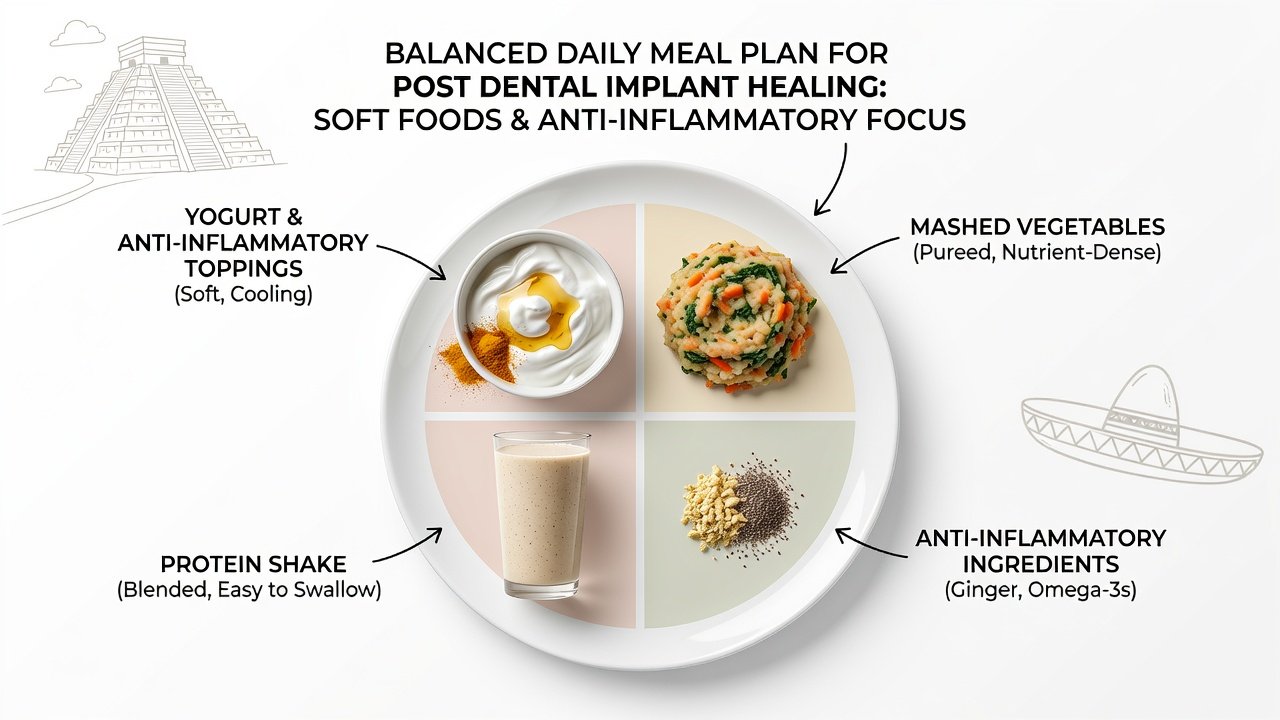
Focus on soft, nutrient-dense options during the first week. Include protein sources like Greek yogurt, scrambled eggs, and smoothies with whey protein to aid tissue repair. Anti-inflammatory choices such as berries, leafy greens, and fatty fish for omega-3s help control swelling. Bone-supporting foods including fortified plant milks, nuts once softened, and avocados rich in healthy fats promote osseointegration. Additional beneficial items are pureed soups with lentils or chickpeas for plant-based protein, mashed bananas for potassium, and well-cooked oatmeal for sustained energy. These foods minimize chewing strain while delivering vitamins A, C, and E that support immune function and collagen production essential for wound closure.
Foods to Avoid
Steer clear of items that irritate the surgical site or hinder healing. Avoid hard foods like nuts and chips, spicy dishes common in Mexican cuisine, sugary snacks that promote bacteria, and alcohol which dehydrates tissues. Hot beverages should be cooled to prevent swelling. Other items to limit include crunchy raw vegetables, tough meats, acidic citrus in excess, and processed snacks high in sodium. These can cause irritation, increase bleeding risk, or introduce bacteria near the implant site. Patients should also avoid straws in the first days because suction can disrupt blood clots and slow initial healing.
Sample Daily Meal Plans
Here is a practical three-day plan suitable for Mexico travel. Day one begins with a banana oat smoothie blended with Greek yogurt and a scoop of protein powder for breakfast. Lunch features a blended vegetable soup made with carrots, zucchini, and lentils. Dinner includes mashed sweet potatoes paired with poached salmon. Snacks consist of cottage cheese mixed with pureed mango. Day two starts with scrambled eggs mixed with spinach, followed by a Greek yogurt parfait with blended berries at lunch. Dinner offers creamy avocado soup with soft tofu, and snacks include a simple protein shake. Day three features overnight oats soaked in almond milk for breakfast, pureed carrot and ginger soup for lunch, and flaked white fish with well-cooked quinoa for dinner. These plans emphasize variety while keeping textures gentle on the surgical area.
Hydration Strategies
Drink at least eight to ten glasses of water daily. Add electrolyte packets or coconut water to maintain balance, especially in Mexico's heat. Herbal teas like chamomile cooled to room temperature provide calming effects without caffeine. Proper hydration supports saliva production, which naturally protects the mouth from bacteria. Patients should sip fluids frequently rather than consuming large amounts at once to avoid discomfort. Carrying a reusable bottle makes it easier to stay consistent while exploring local attractions after the initial recovery period.
Supplements That Support Healing
Consult your dentist before adding supplements. Common recommendations include vitamin D and calcium for bone health, vitamin C for collagen production, and omega-3 fish oil for inflammation control. Many Mexico clinics provide guidance aligned with 2026 wellness protocols. Additional options sometimes suggested are zinc for immune support and probiotics to maintain gut health during antibiotic use. Always choose high-quality, third-party tested products and time intake around meals to improve absorption and reduce stomach upset.
Before-and-After Timelines
Days 1-3 focus on liquid and pureed foods to manage swelling and protect the site. Week 1-2 allows gradual introduction of soft solids as comfort improves. Month 1-3 marks a return toward a normal balanced diet while monitoring implant stability through regular check-ins. Full integration by month six occurs with consistent nutrition and good oral hygiene. Tracking progress with photos or a simple journal helps patients notice improvements and stay motivated. Those who follow these phases closely often report less pain medication use and quicker return to daily activities.
Dentist-Approved Recipes
Try a simple anti-inflammatory smoothie blending one cup Greek yogurt, a handful of spinach, half a banana, and one teaspoon turmeric. Another option is chilled avocado soup blended with cucumber and lime for soothing relief. A third recipe combines cooked and mashed sweet potato with a small amount of cinnamon and a drizzle of honey for a comforting evening option. These recipes require minimal preparation and travel well in insulated containers during a Mexico stay.
Managing Swelling with Anti-Inflammatory Foods
Foods like pineapple for bromelain, turmeric, and ginger help control post-op swelling. Incorporate them early to complement prescribed care and improve comfort during your Mexico stay. Adding these ingredients to smoothies or soups provides natural relief without interfering with medications. Patients who consistently include anti-inflammatory foods often experience reduced facial puffiness by day three or four compared with those who do not.
Mistakes to Avoid During Recovery
Common errors include rushing back to solid foods too soon, skipping meals due to travel fatigue, or neglecting hydration in warm weather. Another frequent mistake is choosing convenience foods from street vendors that may be too spicy or difficult to chew. Planning meals in advance and packing portable options prevents these issues and supports steady nutrient intake throughout the trip.
Combining Nutrition with Mexico Trip Wellness
Many patients combine dental recovery with light wellness activities such as gentle walks along the beach or visits to local markets for fresh produce once cleared by their dentist. The World Health Organization emphasizes holistic approaches to health that include balanced nutrition and rest. Scheduling downtime for meal preparation and relaxation enhances both physical healing and mental well-being during the medical tourism experience.
FAQ
How soon can I eat solid foods? Most patients progress to soft solids after 7-10 days, depending on healing progress and dentist approval.
Are there Mexico-specific dietary considerations? Yes, opt for fresh local produce like papaya for enzymes while avoiding street foods that may irritate the site or introduce bacteria.
Can supplements replace a good diet? No, they complement whole foods best for optimal results and should never replace balanced meals.
What if I experience prolonged swelling? Contact your dental provider immediately and increase intake of anti-inflammatory foods while staying hydrated.
How long should I follow a soft diet? Typically four to six weeks, though individual timelines vary based on the number of implants and personal healing rates.
Conclusion
Combining dental implants in Mexico with targeted nutrition maximizes outcomes and supports overall wellness. Follow these evidence-based strategies for a smoother recovery in 2026 and beyond. Always coordinate with your dental team for personalized advice and enjoy the benefits of a well-planned healing journey.

No comments yet. Be the first!