 Veda Tour

Introduction to Ayurvedic Monsoon Wellness
India's monsoon season brings refreshing rains but also humidity that can disrupt the body's natural balance according to Ayurveda. This ancient Vedic system emphasizes preventive care through seasonal rituals tailored to the environment. In 2026, many are turning to these time-tested methods for maintaining wellness without relying on modern interventions. The focus here is on natural India Ayurveda practices that support immunity and harmony during the wet months. Monsoon, known as Varsha ritu, increases Vata and Kapha doshas while potentially aggravating Pitta. Understanding these shifts helps create personalized routines that prevent common issues like fatigue or digestive discomfort. Practitioners across India recommend starting these rituals early in the season to build resilience before humidity peaks.
By integrating simple daily habits rooted in Vedic texts, individuals can experience improved energy levels and better adaptation to changing weather patterns. This guide provides actionable steps for at-home application, drawing from centuries-old traditions still practiced in regions like Kerala and Rajasthan.
Understanding Doshas in the Monsoon Context
Ayurveda identifies three doshas: Vata, Pitta, and Kapha. During monsoon, excess moisture and cool winds can elevate Vata, leading to dryness internally despite external dampness, while Kapha may cause heaviness. Pitta remains relatively stable but requires attention to avoid imbalances from sudden weather changes. Tailoring rituals to your dominant dosha ensures effective Vedic healing. For example, Vata types often notice joint stiffness or anxiety spikes, whereas Kapha individuals may feel more lethargic. Observing tongue coating or pulse can help identify shifts early.
Traditional assessments involve noting physical and emotional responses to rain. Those with mixed doshas benefit from observing the most prominent symptoms over a week before adjusting routines.
Dosha-Specific Diet Adjustments
Adjusting meals supports digestion weakened by humidity. For Vata types, favor warm, oily foods like ghee-rich soups and cooked grains such as rice porridge with spices. Pitta individuals benefit from cooling yet grounding options such as sweet fruits, cucumbers, and leafy greens prepared mildly. Kapha-dominant people should choose light, spicy dishes with minimal dairy, incorporating mustard seeds and ginger to counter sluggishness. Meals should include bitter vegetables like neem leaves or fenugreek to stimulate appetite.
- Incorporate seasonal vegetables like bitter gourd, ridge gourd, and drumstick lightly spiced with cumin.
- Avoid heavy fried items, cold beverages, and excessive sweets that dampen Agni, the digestive fire.
- Consume meals at consistent times, ideally with lunch as the largest portion to stabilize metabolism throughout the day.
- Drink warm water infused with cumin or fennel between meals for hydration without overload.
Real examples from Gujarat households include preparing moong dal khichdi daily during rains to maintain lightness. Experiment with small portions first to gauge tolerance.
Herbal Teas and Spices for Immunity
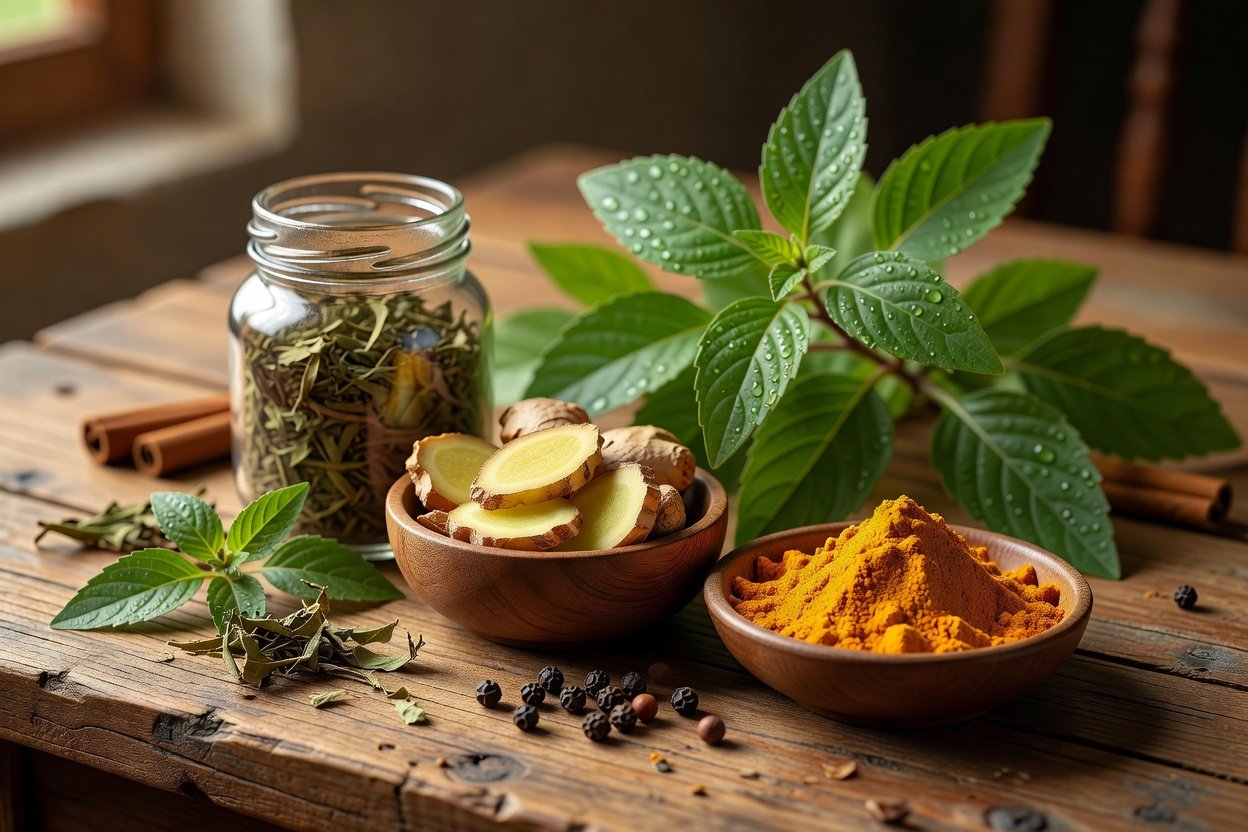
Daily herbal infusions boost resistance naturally. Tulsi, ginger, and turmeric teas are staples in traditional practices. A simple recipe involves steeping fresh tulsi leaves with black pepper, cinnamon, and raw honey for 10 minutes. These spices enhance circulation and clear accumulated moisture without harsh effects. Another blend combines coriander seeds, fennel, and mint for Pitta balance. Regular intake, twice daily, supports respiratory health and reduces bloating common in humid conditions.
Real-life examples from Kerala households show families preparing spiced buttermilk with curry leaves daily to aid digestion. Such routines have sustained communities through generations of monsoon challenges. Adding a pinch of long pepper can further strengthen the effect for those prone to colds.
Daily Oil Massages for Balance
Abhyanga, the self-massage with warm oils, counters dryness and promotes circulation. Use sesame oil for Vata, coconut for Pitta, and mustard for Kapha. Perform this ritual in the morning before bathing, focusing on joints, soles of feet, and the scalp for five to ten minutes per area. Warm the oil gently using a double boiler method, then apply with long strokes on limbs and circular motions on joints.
Practical steps include starting from the head downward, resting for 15 minutes post-massage, and following with a warm shower using mild herbal soap. This Vedic practice grounds the body amid fluctuating weather and improves skin resilience against dampness. Many report better sleep after consistent application over two weeks.
Yoga Modifications for Humidity
Adapt yoga sequences to reduce strain from damp air. Favor grounding poses like Tadasana, Vrikshasana, and gentle twists over intense flows or inversions. Include pranayama such as Nadi Shodhana and Bhramari to clear channels and calm the mind. Sessions of 30 to 45 minutes daily maintain flexibility and mental clarity. Modify sun salutations by slowing the pace and adding child’s pose between rounds. Focus on hip openers and forward bends to release Kapha stagnation while supporting Vata stability.
Beginners can follow a simple sequence: mountain pose, tree pose, seated twist, and ending with corpse pose. Track progress by noting energy levels before and after practice.
Building a Complete Daily Monsoon Routine
Combine elements into a structured schedule. Morning starts with oil massage and herbal tea, followed by light yoga. Midday emphasizes balanced lunch and short walks under cover. Evening includes another tea, light dinner, and wind-down stretches. Weekly oil treatments on the scalp with medicated oils like bhringraj can enhance hair health affected by moisture. Track adherence in a journal to refine based on personal responses.
Comparisons of Common Monsoon Ailments Versus Ayurvedic Solutions
Common issues like low energy contrast with solutions such as Kapha-reducing spices in meals versus Vata-pacifying oils. Digestive heaviness finds relief in fennel teas rather than heavy antacids. Skin irritations respond to coconut oil applications instead of chemical lotions. These preventive approaches differ from acute treatments by emphasizing ongoing balance through natural India Ayurveda methods.
Real-Life Traditional Practices
In Ayurvedic ashrams across India, practitioners demonstrate seasonal routines that include daily oil applications and diet tweaks passed down through families. Families in coastal regions share stories of sustained energy from consistent rituals, illustrating the depth of Vedic wisdom. In Rajasthan, communities adapt by using local spices like asafoetida in dals to prevent gas buildup during rains. These examples highlight adaptability across diverse Indian climates.
Frequently Asked Questions
How do beginners start these rituals? Begin with one practice like herbal tea and gradually add massages over a week. Consult a local Ayurvedic practitioner for personalization based on your prakriti.
Are these suitable for all ages? Yes, with modifications; children and elders can use milder oils and simpler diets under guidance.
What if I have multiple doshas? Focus on the most aggravated one based on symptoms and observe changes over weeks before expanding.
How long until results appear? Many notice improvements in digestion and energy within 7 to 14 days of consistent practice.
Can these be combined with modern routines? Yes, they complement daily life when integrated gradually without overwhelming schedules.
Conclusion
Embracing Ayurvedic rituals during India's monsoon fosters resilience through dosha-aware diets, herbal support, massages, and yoga. These natural methods rooted in Vedic traditions offer actionable wellness for 2026 and beyond. Integrate them mindfully for lasting balance. For broader context on traditional medicine, explore resources from the World Health Organization and National Center for Complementary and Integrative Health.


No comments yet. Be the first!