 Veda Tour

Introduction to Ayurvedic Migraine Relief
Migraines affect millions worldwide, prompting many to seek natural alternatives in 2026. Ayurvedic migraine relief draws from ancient Vedic healing traditions popular across India, focusing on restoring balance rather than merely masking symptoms. This approach identifies root causes through dosha imbalances and offers personalized therapies using herbs, oils, routines, and specialized treatments like Shirodhara. Rooted in India's rich heritage, these methods emphasize holistic wellness. Practitioners tailor plans to individual constitutions, providing sustainable prevention alongside relief. In recent years, interest in Vedic healing has grown as people look for ways to manage chronic conditions without heavy reliance on pharmaceuticals. Ayurvedic centers in states like Kerala, Rajasthan, and Uttarakhand attract both domestic and international visitors seeking authentic experiences. The principles date back thousands of years to the Vedas, where health is viewed as harmony between body, mind, and spirit. For migraine sufferers, this means addressing not just the headache but lifestyle factors such as stress, diet, sleep, and environmental influences that trigger episodes.
Identifying Dosha Imbalances Causing Headaches
In Ayurveda, migraines often stem from imbalances in the three doshas: Vata, Pitta, and Kapha. Vata imbalances may cause throbbing pain with anxiety, dry skin, and irregular digestion, often worsened by cold weather or irregular schedules. Pitta triggers intense heat, burning sensations, sensitivity to light, and irritability, commonly linked to spicy foods or overwork. Kapha types experience dull, heavy headaches with congestion, lethargy, and sinus issues, frequently triggered by damp climates or overeating. Diagnosis involves pulse reading, tongue analysis, and lifestyle assessment by a qualified vaidya. A typical consultation might include questions about daily habits, emotional state, and previous treatments. Addressing the specific dosha through diet, herbs, and therapies yields better long-term results than generic treatments. For example, a Vata-dominant person might be advised to favor warm, oily foods while avoiding raw salads. Real-world application shows that tracking symptoms alongside dosha patterns helps refine the approach over multiple sessions, leading to fewer recurrences.
Recommended Herbs and Oils: Turmeric and Sesame
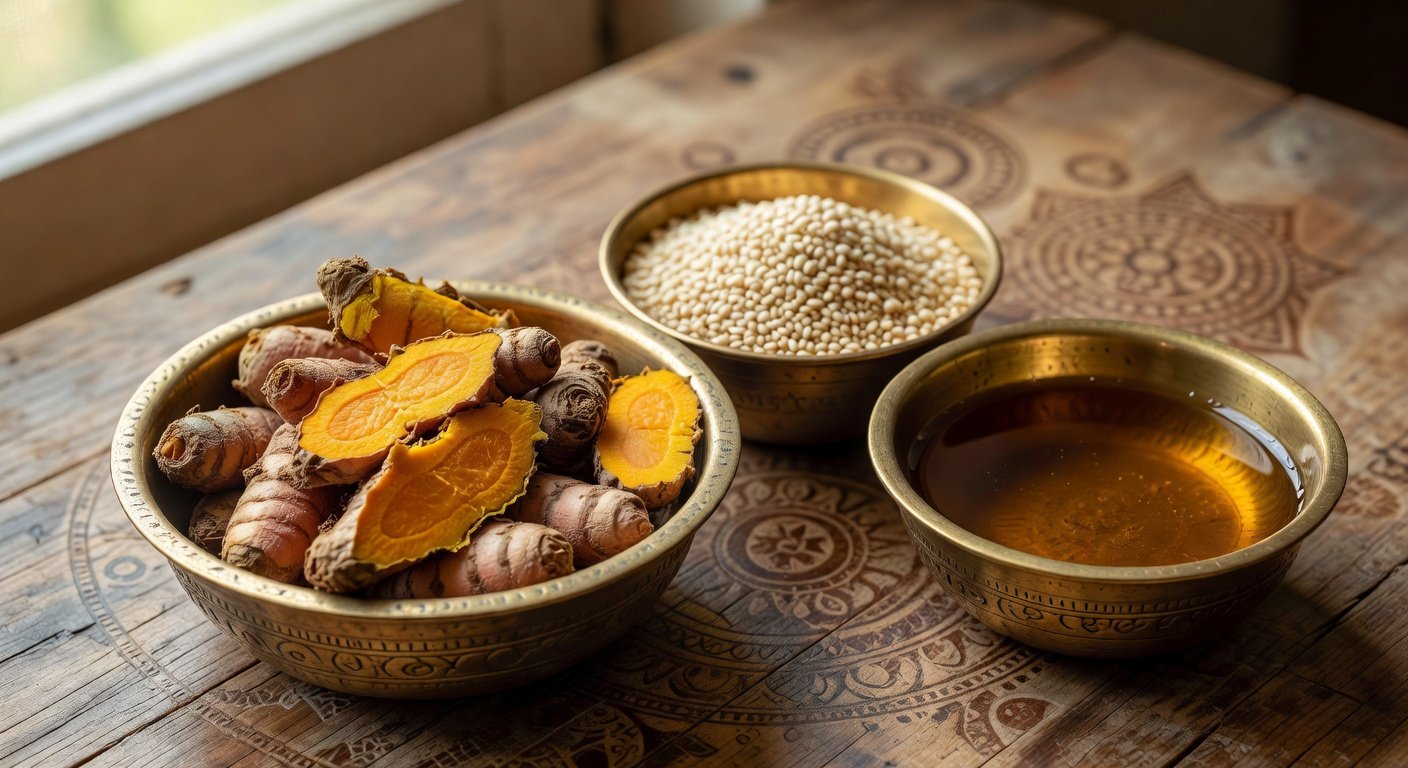
Key Ayurvedic remedies include turmeric for its anti-inflammatory curcumin content and sesame oil for its warming, grounding properties. Turmeric milk or pastes applied to the forehead help reduce Pitta-related inflammation, while a daily teaspoon of turmeric mixed with honey can support overall immunity. Warm sesame oil massages on the scalp soothe Vata disturbances and improve circulation when performed in circular motions for 10-15 minutes before bathing. Other supportive herbs like Brahmi for mental clarity, Shankhpushpi for calming nerves, and Ashwagandha for stress reduction enhance cognitive calm. These are typically prepared fresh or as per traditional formulations under expert guidance. Practical application involves creating simple home remedies such as a turmeric-sesame paste for topical use or herbal teas consumed twice daily. Many practitioners recommend sourcing organic herbs from trusted Indian suppliers to ensure potency. Over time, consistent use combined with dietary adjustments can significantly lower migraine intensity and frequency, as observed in wellness retreats throughout India.
Daily Routines and Yoga Poses for Prevention
Establishing a dinacharya (daily routine) is foundational. Wake early around sunrise, practice oil pulling with sesame oil for oral health, and follow a dosha-appropriate diet avoiding triggers like caffeine, alcohol, or heavy spices. Incorporate self-massage with warm oils, meditation, and adequate hydration throughout the day. Yoga poses such as Child's Pose for relaxation, Forward Fold to release tension, Downward Dog for circulation, and Alternate Nostril Breathing to balance energy calm the nervous system. Regular practice, ideally 20-30 minutes daily in the morning, reduces frequency of attacks by improving blood flow and reducing stress hormones. A sample routine might start with 5 minutes of breathing exercises, followed by 10 minutes of targeted poses, and end with a short guided meditation. In Indian ashrams and wellness centers, group yoga sessions tailored for migraine patients often include modifications for beginners. Tracking progress in a journal helps identify which poses provide the most relief, allowing for personalized adjustments that enhance overall well-being.
World Health Organization resources on traditional medicine highlight the growing global interest in such integrative practices.
Step-by-Step Application of Shirodhara Therapy
Shirodhara involves a steady stream of warm medicated oil poured over the forehead for 30-60 minutes. This deeply relaxes the mind and balances Vata and Pitta by stimulating the third eye area and calming the nervous system. Sessions are often repeated over 7-14 days for optimal effect. Step-by-step: First, consult a practitioner for personalized oil selection based on your dosha. Second, lie comfortably on a treatment table with eyes covered. Third, receive the continuous oil flow from a suspended vessel moving gently across the forehead. Fourth, rest quietly afterward to integrate benefits, followed by a light meal. Benefits include reduced headache frequency, better sleep, and mental clarity. Many report immediate relaxation during the process, with effects building cumulatively. In practice, this therapy is often combined with other treatments like Abhyanga massage for comprehensive results at reputable Indian facilities.
Comparing Ayurvedic Methods with Western Approaches
Western medicine typically relies on pharmaceuticals like triptans for acute relief or beta-blockers for prevention. While effective for many, they can cause side effects such as nausea or fatigue. Ayurvedic methods offer gentler, root-cause solutions without dependency risks, though results may take longer to manifest. Integration of both can be ideal under professional supervision, allowing patients to use acute medications sparingly while building preventive habits through Ayurveda. Evidence from various studies supports complementary use, showing improved quality of life when patients combine lifestyle changes with conventional care. National Center for Biotechnology Information studies explore complementary evidence, and NCCIH guidelines provide further context on integrative health options. Patients in India often transition gradually, monitoring symptoms to find the right balance.
Real-Life Examples from Indian Practitioners
In Kerala wellness centers, patients report significant relief after combining Shirodhara with yoga. One case involved a 35-year-old software engineer from Bangalore who experienced weekly migraines due to screen time and stress; after a 10-day Ayurvedic program including turmeric regimens and daily yoga, his episodes dropped to once a month. A Mumbai-based vaidya shares cases where a 42-year-old teacher with Pitta-type migraines used sesame oil massages and dietary changes, achieving half the previous intensity within three weeks. Another example from an ashram in Rishikesh details a retired professional who incorporated Brahmi supplements and pranayama, noting sustained relief and improved focus over six months. These stories underscore personalized care's power in India's Ayurvedic hubs, where follow-up consultations ensure ongoing adjustments.
FAQ Section
Is Ayurvedic treatment safe for migraines?
Yes, when administered by certified practitioners using quality ingredients. Side effects are minimal compared to some conventional drugs, though individual allergies should be checked beforehand.
How long until results appear?
Many notice improvements within 2-4 weeks, with full benefits after consistent therapy spanning one to three months depending on severity and adherence.
Can it replace Western medication?
It serves as a complementary option; abrupt cessation of prescribed drugs is not advised without medical supervision to avoid rebound effects.
What lifestyle changes support Ayurvedic migraine care?
Key changes include consistent sleep schedules, stress management through meditation, and avoiding known dietary triggers while favoring fresh, seasonal foods.
Are there any contraindications?
Pregnant individuals or those with certain skin conditions should consult specialists before therapies like Shirodhara to ensure safety and appropriateness.
Conclusion
Ayurvedic migraine relief through Vedic healing offers a profound, natural pathway popular in India for 2026. By addressing doshas, incorporating herbs and yoga, and embracing therapies like Shirodhara, individuals achieve lasting wellness. Explore these traditions with qualified experts for transformative results that complement modern lifestyles effectively.


No comments yet. Be the first!