 Veda Tour

Introduction to Hair Transplant Recovery in Turkey
Hair transplants in Turkey have become a top choice for medical tourists due to affordable prices, experienced surgeons, and high-quality care. Procedures like FUE (Follicular Unit Extraction) and DHI (Direct Hair Implantation) offer natural results. However, success depends on proper post-operative care. This guide provides a day-by-day recovery timeline, drawing from expert tips by Turkish clinics such as those in Istanbul. We'll cover managing swelling, scab care, nutrition, medications, resuming activities, and avoiding complications. Plus, look ahead to 2026 advancements for even smoother recoveries.
Following these steps ensures your grafts take root effectively, minimizing risks like infection or poor growth. Always consult your surgeon for personalized advice.
Immediate Post-Op: First 24 Hours (Day 1)
Right after surgery, you'll wear a protective bandage on the donor area. Expect mild pain, numbness, and redness. Turkish clinics typically provide painkillers, antibiotics, and anti-inflammatory meds.
- Rest: Sleep with your head elevated at 45 degrees using 2-3 pillows to reduce swelling.
- Washing: No washing yet. Your clinic may apply a special foam solution later.
- Medications: Take prescribed oral antibiotics and pain relievers. Avoid aspirin or blood thinners.
- Diet: Start with light, protein-rich foods like yogurt, eggs, and soups. Hydrate well.
Avoid touching the scalp. Turkish experts recommend wearing a loose hat if traveling home.
Days 2-3: Initial Swelling and Itching
Swelling peaks around day 3, often around the forehead and eyes. This is normal but uncomfortable.
- Apply cold compresses (not directly on grafts) for 10-15 minutes hourly.
- Use clinic-provided sprays or lotions gently twice daily.
- Itching begins as grafts settle—resist scratching to prevent dislodging follicles.
Scab Care: Tiny scabs form; don't pick them. Moisturize with saline spray. Nutrition tip: Boost vitamin C and zinc intake via oranges, nuts, and lean meats to aid healing.
For meds, continue antibiotics and add antihistamines if itchy. Turkish clinics emphasize arnica tablets for bruising reduction.
Days 4-7: First Wash and Scab Softening
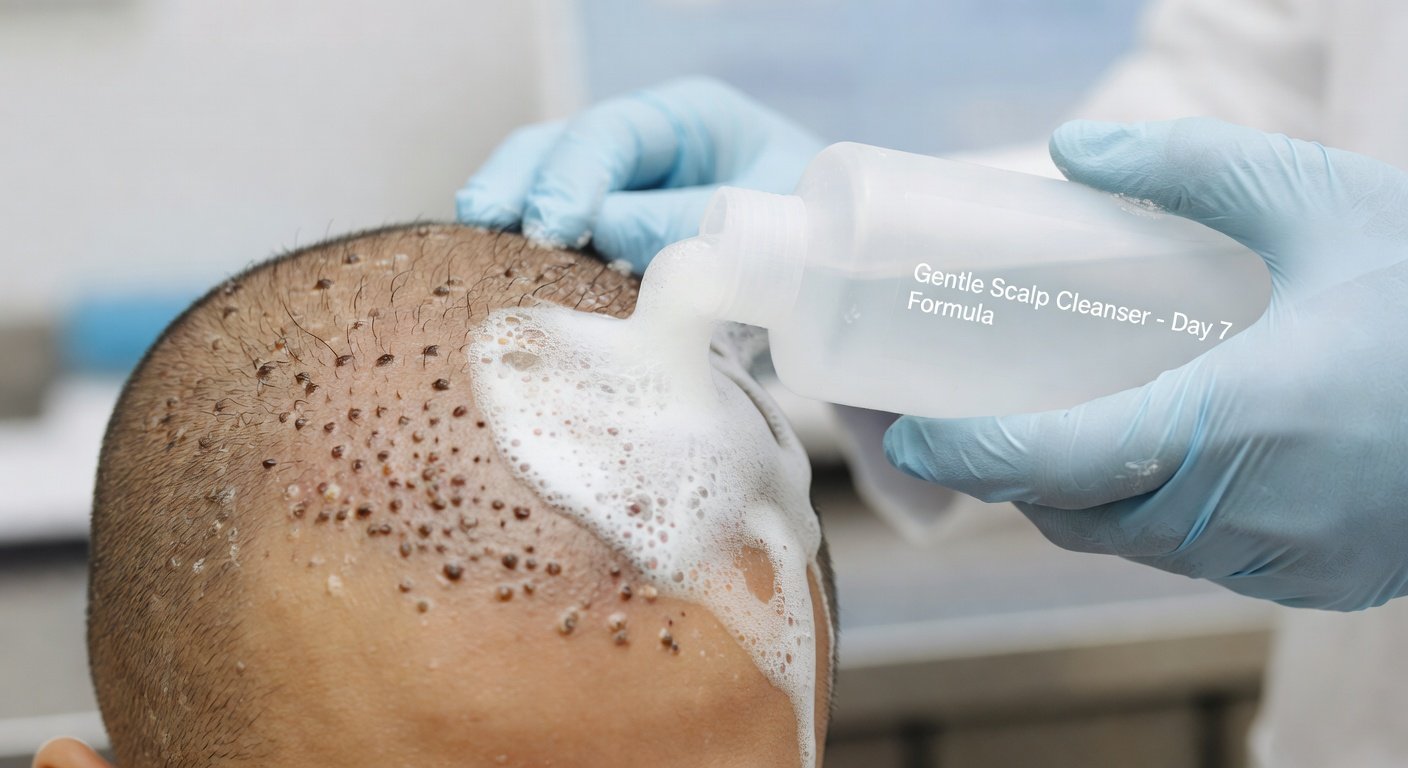
Day 4 marks the first gentle wash using baby shampoo diluted with water. Pat dry—never rub.
- Swelling Management: It subsides; switch to warm compresses.
- Scabs: They soften. Daily lotions help them fall off naturally by day 10.
- Activities: Light walking is okay, but no sweating or sun exposure.
Avoid alcohol, smoking, and caffeine, which constrict blood vessels. Expert nutrition from Turkish docs: Pineapple enzyme (bromelain) smoothies reduce inflammation.
Resuming Daily Activities
By day 5, you can drive short distances. No gym or heavy lifting until week 2. For medical tourists, plan a 7-10 day stay in Turkey for follow-ups.
Week 2: Graft Settling and Shock Loss
Grafts enter a resting phase; some native hairs shed (shock loss)—normal and temporary.
Tips:
- Gentle daily washing with mild shampoo.
- Introduce minoxidil if prescribed (after day 14).
- Resume work remotely; wear a scarf or hat outdoors.
Complication avoidance: Watch for excessive redness or pus—contact your clinic immediately. Turkish protocols include telemedicine check-ins for tourists.
Mayo Clinic's hair transplant overview aligns with these steps, stressing hygiene.Weeks 3-4: Visible Progress
Scabs gone, redness fades. Resume light exercise, but protect from sun with SPF 50 hats.
Nutrition focus: Biotin-rich foods (eggs, salmon) and omega-3s for follicle health. Turkish clinics recommend PRP (Platelet-Rich Plasma) follow-up sessions at week 4 to boost growth.
Month 1-3: Long-Term Care
New hairs sprout around month 3. Continue minoxidil/topical treatments. Full results take 12 months.
- No tight hats or helmets.
- Quarterly check-ups, even virtually.
2026 Advancements in Post-Op Care
Turkish clinics lead with innovations like AI-monitored recovery apps tracking swelling via photos. Nano-follicle coatings reduce scabbing by 50%. Stem cell serums accelerate growth by 30%. Hypoallergenic LED helmets promote healing at home. Expect drone-delivered meds for tourists and VR relaxation sessions to cut stress-related shedding.
These build on robotic FUE precision, per the International Society of Hair Restoration Surgery.
Expert Tips for Medical Tourists from Turkish Clinics
Choose JCI-accredited clinics. Pack elevated pillows and saline. Stay hydrated during flights. Budget for hotel recovery suites. Avoid complications by following no-touch rules strictly.
Nutrition Plan
- Proteins: Chicken, fish (daily).
- Vitamins: A, C, E from veggies/fruits.
- Hydration: 3L water/day.
Medication Schedule
- Antibiotics: 5-7 days.
- Painkillers: As needed, taper off.
- Supplements: Multivitamin + zinc.
Success rate: 95%+ graft survival with compliance.
Conclusion
Recovering from a hair transplant in Turkey is straightforward with this day-by-day plan. Prioritize rest, hygiene, and nutrition for stunning results. Consult Turkish experts for tailored plans—your new hairline awaits!


No comments yet. Be the first!