 Veda Tour
Introduction to Dental Implants: Titanium vs Zirconia in Mexico
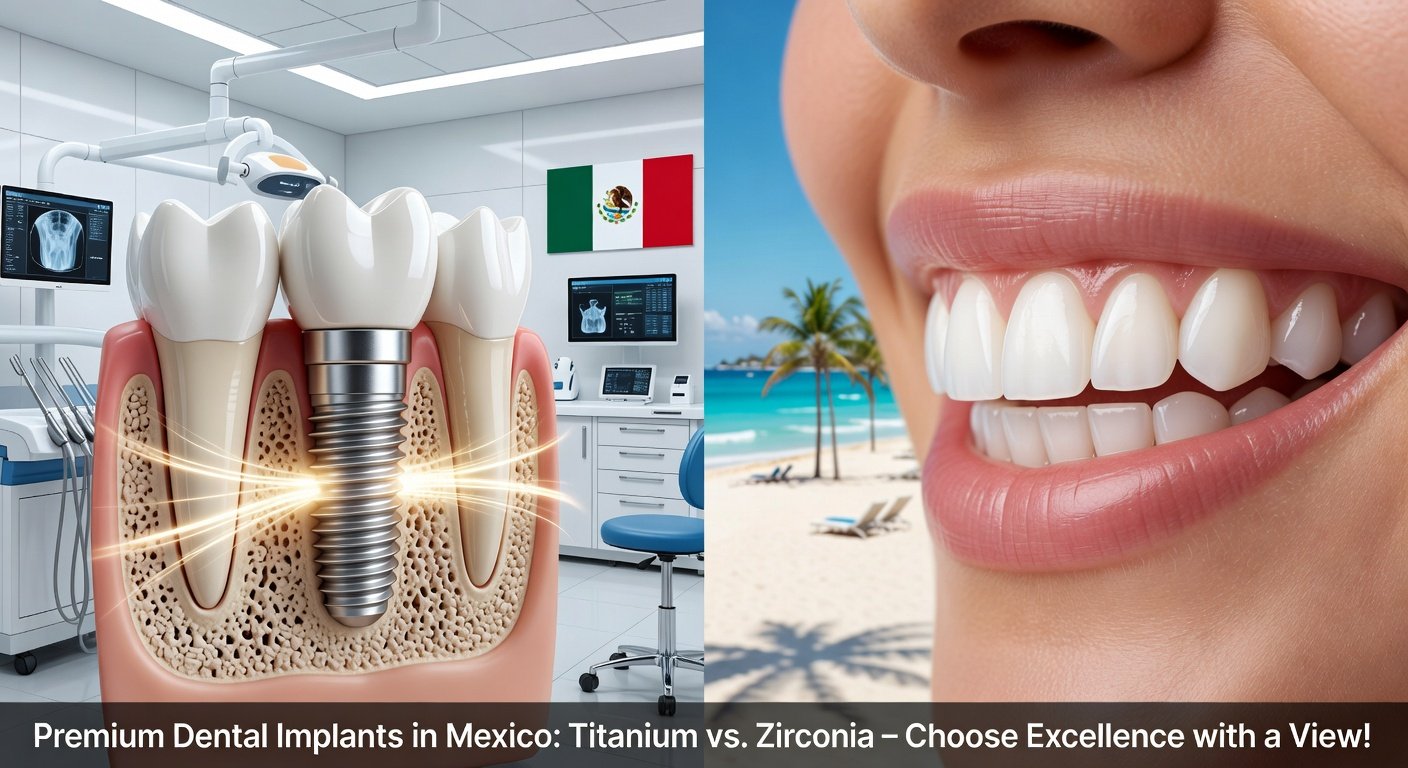
Dental implants have revolutionized tooth replacement, offering a durable, natural-looking solution for missing teeth. For medical tourists eyeing affordable options in 2026, Mexico stands out as a top destination, with clinics in Tijuana, Cancun, and Los Algodones providing high-quality care at fractions of US prices. But when choosing between titanium and zirconia implants, factors like durability, aesthetics, biocompatibility, and allergy risks come into play. This comprehensive guide compares the two materials, breaks down projected 2026 costs in Mexico versus the US, assesses patient suitability, shares real-world outcomes, and provides a step-by-step decision framework. Whether you're debating implant materials for medical tourism or seeking the best value abroad, we'll address your search intent head-on.
Mexico's dental tourism scene is booming, with advancements in CAD/CAM technology and hybrid implant systems making it a smart choice. According to industry trends, implant procedures here can save patients 60-70% compared to stateside costs, without compromising FDA-approved standards.
What Are Titanium Dental Implants?
Titanium implants, the gold standard since the 1960s, are made from commercially pure titanium or titanium alloys (like Ti-6Al-4V). Surgically placed into the jawbone, they act as artificial roots for crowns, bridges, or dentures. Their success stems from osseointegration—the process where bone fuses with the implant surface over 3-6 months.
Key Advantages:
- Durability: Proven longevity of 20+ years with 95-98% success rates, per long-term studies.
- Strength: High tensile strength handles heavy bite forces (up to 500 psi).
- Versatility: Suitable for single teeth, full arches (All-on-4/6), and bone-grafting cases.
Drawbacks: Metallic gray hue may show through thin gums ("shiny metal" effect), and rare allergies affect 0.6% of patients, often linked to nickel traces in alloys. For more on titanium's safety, visit the FDA's medical devices page.
What Are Zirconia Dental Implants?
Zirconia (zirconium dioxide) implants emerged in the 2000s as a ceramic alternative. One-piece or two-piece designs mimic natural teeth with a white color. They're machined from biocompatible zirconia blocks using digital milling for precision.
Key Advantages:
- Aesthetics: Opaque white material blends seamlessly with gums, ideal for visible smiles.
- Biocompatibility: Hypoallergenic, zero metal corrosion, and low plaque adhesion reduce peri-implantitis risk.
- Holistic Appeal: Popular among patients avoiding metals for health or aesthetic reasons.
Drawbacks: Less flexible than titanium, prone to fracture under extreme forces (success rate 90-95%). Higher cost due to material and manufacturing. Bone integration is solid but may take longer. Learn more from the American Dental Association.
Titanium vs Zirconia: Head-to-Head Comparison
Here's a detailed pros/cons breakdown for medical tourists:
| Factor | Titanium | Zirconia |
|---|---|---|
| Durability | Superior (20-30 years) | Good (15-25 years), but brittle |
| Aesthetics | Good, but metal shine possible | Excellent, tooth-like |
| Biocompatibility | High, rare allergies (0.6%) | Superior, metal-free |
| Allergy Risk | Low, but possible | None |
| Bite Strength | Handles 400-550N | 300-450N, better for lighter bites |
| Cost per Implant (Mexico 2026) | $800-$1,200 | $1,200-$1,800 |
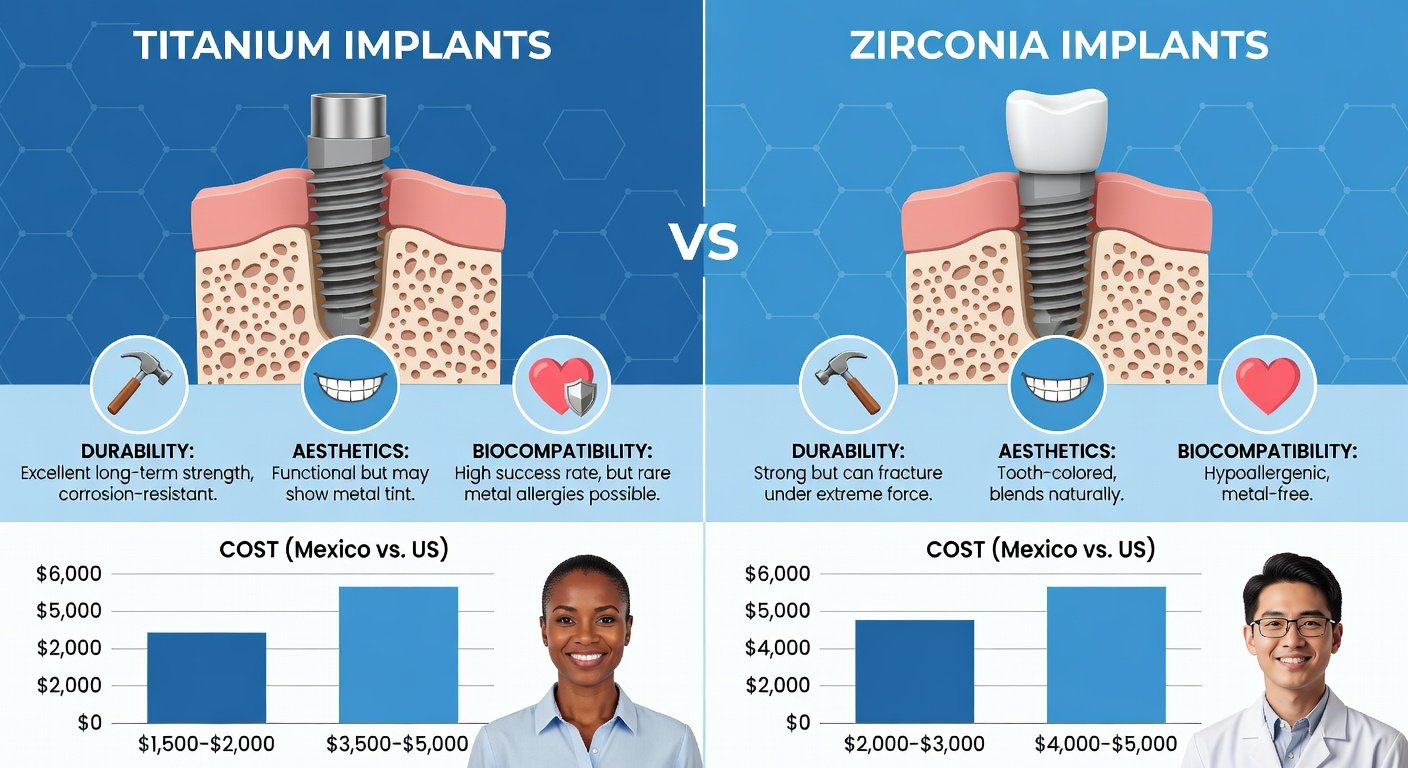
This comparison highlights titanium's edge in strength for grinders or full-mouth restorations, while zirconia shines for anterior teeth or metal-sensitive patients.
2026 Costs: Mexico vs US
Projected 2026 prices reflect inflation, tech upgrades, and tourism demand. In Mexico:
- Titanium: $800-$1,200 per implant (Tijuana clinics like Sani Dental offer packages under $1,000).
- Zirconia: $1,200-$1,800, with premiums for custom-milled options.
- Full mouth (All-on-4): Titanium $12,000-$18,000; Zirconia $18,000-$25,000.
US counterparts? Titanium: $3,000-$5,000; Zirconia: $4,500-$6,500 per implant. Savings: 70% in Mexico, plus vacation perks. Factors like clinic accreditation (e.g., ISO-certified) keep quality high.
Patient Suitability: Who Should Choose What?
Not one-size-fits-all. Consider:
- Bite Strength: Heavy bruxers? Titanium. Light biters? Zirconia.
- Smile Visibility: Front teeth? Zirconia for no gray lines.
- Allergies/Metal Sensitivity: Zirconia if you've reacted to jewelry or ortho wires.
- Bone Density: Titanium excels in low bone via alloys; zirconia needs good density.
- Age/Lifestyle: Young athletes: titanium; holistic seniors: zirconia.
Real-world example: Sarah, a 45-year-old from California, chose zirconia in Cancun for her visible canines after titanium allergy tests. Five years post-op, zero issues, per her review on dental tourism forums. Conversely, Mike, a 60-year-old with grinding habits, opted for titanium All-on-6 in Los Algodones—stable after 3 years despite heavy use.
Step-by-Step Decision Guide for Implants in Mexico
Navigate your choice systematically:
- Self-Assess: List priorities (cost, looks, allergies) and get a panoramic X-ray/DVT scan stateside ($100-$300).
- Research Clinics: Target JCI-accredited spots like Dental Departures-listed providers. Check reviews on RealSelf.
- Virtual Consult: Upload scans for free quotes. Discuss material trials (skin patch for titanium).
- Imaging & Planning: In Mexico, get CBCT for 3D bone mapping ($150).
- Choose Material: Trial abutments simulate aesthetics.
- Book & Travel: Factor recovery (1-2 weeks soft foods).
- Follow-Up: Remote checks; return for crown at 4-6 months.
Mexico's 2026 advancements include AI-driven implant placement (95% precision) and bioactive coatings boosting integration by 20%.
Mexico's Implant Tech Advancements in 2026
Beyond basics, clinics adopt Nobel Biocare hybrids (titanium base, zirconia crown) and Straumann's Roxolid (stronger titanium-zirconium alloy). Laser-assisted surgery cuts healing to 8 weeks. For insights, see Mayo Clinic's dental implant overview.
FAQs: Longevity, Maintenance, and More
Q: How long do they last? Titanium: 25+ years; Zirconia: 15-20+ with care.
Q: Maintenance tips? Brush/floss daily, 6-month hygienist visits, night guards for grinders.
Q: Risks in Mexico? Minimal with vetted clinics; infection rates <2%.
Q: Insurance coverage? Often not for abroad, but FSA/HSA eligible.
Q: Zirconia for full arches? Yes, but titanium hybrids preferred for strength.
Conclusion: Make the Right Choice for Your Smile
Titanium offers unbeatable durability for most, while zirconia prioritizes aesthetics and allergy-free bliss. In Mexico 2026, both deliver life-changing results at unbeatable prices. Consult a specialist, weigh your needs, and reclaim your confident smile affordably. Ready to book? Start with a virtual consult today.

No comments yet. Be the first!