 Veda Tour
Why Choose Turkey or South Korea for Cosmetic Surgery in 2026?
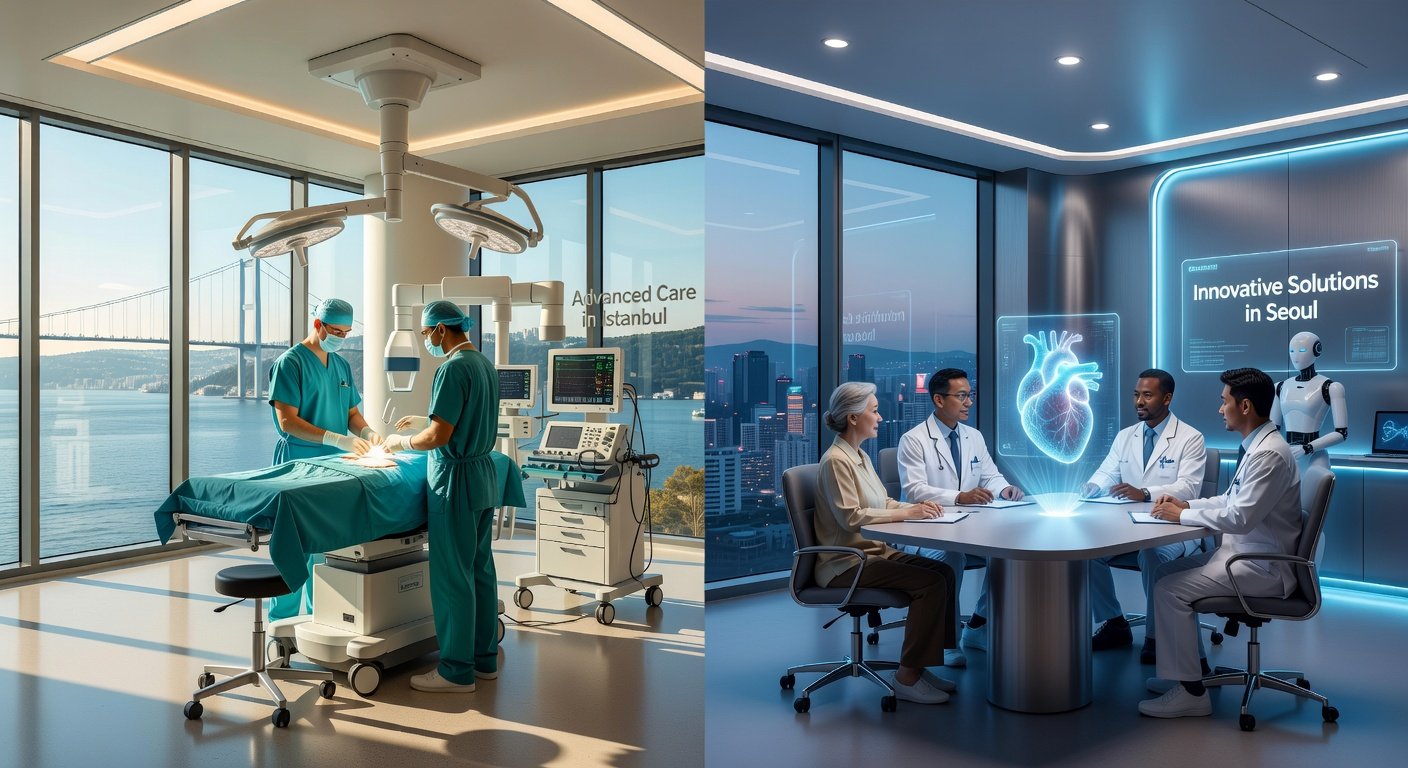
Medical tourism for cosmetic procedures is booming, and two destinations stand out: Turkey and South Korea. Both offer world-class facilities, skilled surgeons, and affordable prices, drawing patients from Europe, the US, and beyond. In 2026, expect even more innovation with AI-assisted planning and faster recovery tech. We'll compare them head-to-head on popular treatments like rhinoplasty (nose jobs) and facelifts, diving into costs, surgeon credentials, clinic accreditations, and recovery experiences. By the end, you'll have a clear verdict and essential safety tips.
Turkey has long been a budget-friendly hub, performing over 1 million cosmetic surgeries annually. South Korea, dubbed the 'plastic surgery capital,' leads in precision and natural results, with Seoul's Gangnam district as the epicenter.
Popular Treatments: Rhinoplasty and Facelifts
Rhinoplasty
Rhinoplasty reshapes the nose for aesthetic or functional improvements. In Turkey, ultrasonic rhinoplasty is popular, using advanced tools for minimal swelling. Clinics like those in Istanbul offer natural-looking results tailored to diverse ethnicities.
South Korea excels in 'K-nose' procedures, emphasizing slim, high bridges with celebrity-inspired subtlety. Techniques like rib cartilage grafting provide precise, long-lasting changes.
Facelifts
Facelifts tighten skin and underlying tissues for a youthful appearance. Turkey favors deep-plane facelifts, addressing sagging jowls effectively at lower costs. South Korea pioneers minimally invasive thread lifts and SMAS (Superficial Musculoaponeurotic System) lifts, ideal for subtle rejuvenation popular among K-pop fans.
Cost Comparison
Cost is a major draw for medical tourists. In 2026 projections:
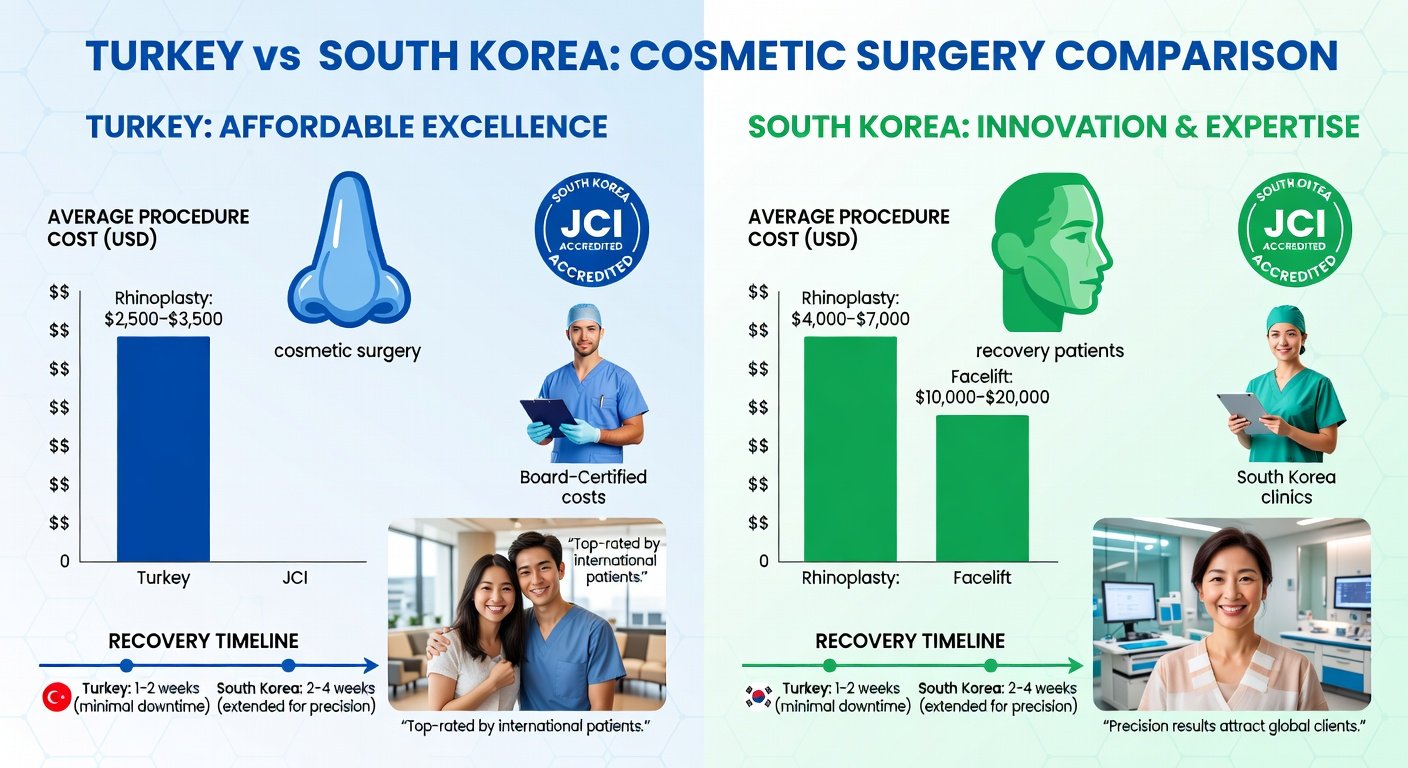
- Rhinoplasty: Turkey: $2,500–$5,000 (includes hotel, transfers). South Korea: $4,000–$8,000.
- Facelift: Turkey: $3,500–$7,000. South Korea: $6,000–$12,000.
Turkey saves 40-60% due to lower operational costs and currency advantages. Packages often bundle accommodation and aftercare. South Korea's higher prices reflect premium tech like 3D imaging and luxury recovery suites, but value shines in revision rates under 5%.
Surgeon Credentials
Both countries boast elite surgeons. Turkish doctors, many EBOPRAS-certified (European Board of Plastic Surgery), train internationally and handle high volumes—over 500,000 procedures yearly.
Korean surgeons lead globally; check for KSPRS (Korean Society of Plastic and Reconstructive Surgeons) membership. Pioneers like Dr. Kim Byung-Gun have thousands of cases. For verification, consult the International Society of Aesthetic Plastic Surgery (ISAPS) global surgeon directory, which lists verified experts from both nations.
Clinic Accreditations
Accreditation ensures safety. Turkey's top clinics like Acibadem and Memorial Hospitals hold Joint Commission International (JCI) seals, matching US standards. Over 30 JCI-accredited facilities focus on cosmetics.
South Korea has 60+ JCI-accredited hospitals, including ID Hospital and TL Plastic Surgery. The Ministry of Health rigorously oversees, with KHIDA (Korea Health Industry Development Institute) promoting quality. Both exceed WHO safety benchmarks.
Patient Recovery Experiences
Recovery varies by destination culture and support.
- Turkey: Patients rave about all-inclusive packages: VIP airport pickups, English-speaking coordinators, and seaside recovery villas. Downtime for rhinoplasty: 7-10 days; facelifts: 10-14 days. Post-op care includes lymphatic massages. Complications are low (2-3%), but language barriers exist outside major clinics.
- South Korea: Ultra-modern recovery: hyperbaric oxygen chambers, scar-minimizing lasers, and K-beauty regimens (masks, LED therapy). Rhinoplasty recovery: 5-7 days; facelifts: 7-10 days. Concierge services offer shopping escorts. Patients report smoother healing due to advanced tech, though jet lag from long flights can challenge Westerners.
Reviews on RealSelf and WhatClinic show 95% satisfaction in both, with Korea edging in 'natural results' and Turkey in 'value for money.'
Verdict: Which is Best for Specific Procedures?
For Rhinoplasty: Turkey wins for budget-conscious patients seeking ethnic-specific noses. Go Korea if precision and K-line aesthetics are priorities—worth the premium.
For Facelifts: South Korea takes the crown for cutting-edge, minimal-scar techniques ideal for 40+ patients wanting subtle lifts. Turkey suits full rejuvenations on a budget.
Overall 2026 pick: Turkey for high-volume, affordable ops; South Korea for luxury, tech-driven perfection. Hybrid trips (surgery in one, recovery in the other) are trending.
Safety Tips for Medical Tourists
- Verify surgeon portfolios and before/afters via video consults.
- Choose JCI-accredited clinics only.
- Buy comprehensive travel insurance covering medical evacuations.
- Plan 1-2 weeks extra for follow-ups; avoid flying too soon post-op.
- Research via official sites: Turkey's health tourism portal or Korea's medical tourism board.
- Get PCR tests/vaccines; monitor for blood clots.
- Join expat forums like Reddit's r/PlasticSurgery for real stories.
With proper research, 2026 promises transformative results safely. Consult professionals before booking—your new you awaits!
Turkey is also a top destination for hair transplant tourism.
No comments yet. Be the first!