 Veda Tour
Introduction to Cosmetic Surgery Tourism in 2026
Medical tourism for cosmetic procedures is booming, offering high-quality treatments at fractions of Western costs. In 2026, destinations like Turkey, Thailand, Mexico, and South Korea lead with advanced facilities and skilled surgeons. Savings can reach 70%, but safety is paramount. This guide walks you through every step—from research to recovery—ensuring a seamless, secure journey.
Step 1: Research Accredited Clinics and Board-Certified Surgeons
Start with verification. Look for clinics accredited by Joint Commission International (JCI), the gold standard for global healthcare quality. Cross-check surgeons via the International Society of Aesthetic Plastic Surgery (ISAPS).
- Read patient reviews on RealSelf or Trustpilot, focusing on recent 2025-2026 experiences.
- Verify surgeon credentials: board certification, procedure volume (aim for 500+ annually), and before-after photos.
- Use clinic websites for virtual tours and success rates.
Top picks: Istanbul for rhinoplasty, Seoul for double eyelid surgery, Bangkok for full facelifts.
Step 2: Choosing Your Procedure
Select based on goals, age, and health. Popular 2026 options:
- Botox and Fillers: Quick, minimal downtime; ideal for first-timers. Costs $200-400 vs. $600+ at home.
- Facelifts and Neck Lifts: Comprehensive rejuvenation; expect $4,000-8,000 abroad.
- Liposuction or Mommy Makeovers: Body contouring bundles save 50-60%.
- Breast Augmentation or Lifts: Silicone implants from trusted brands like Motiva.
Consult virtually first. Discuss realistic outcomes and risks like asymmetry or infection.
Step 3: Budgeting and Insurance
Factor in all costs: procedure (60%), flights/hotels (20%), meds/follow-ups (10%), misc (10%). Example: Facelift in Turkey: $5,500 total vs. $15,000 in the US.
- Create a spreadsheet: quotes from 3+ clinics.
- Insurance: Standard policies exclude cosmetics, but buy medical tourism coverage from Allianz or IMG ($50-200 for $50K coverage).
- Currency fluctuations: Lock rates with forward contracts if traveling far out.
Hidden fees: Airport transfers, compression garments, pathology tests.
Step 4: Visa Processes and Travel Logistics
2026 updates streamline e-visas. Turkey offers 90-day medical visas; Thailand's MT visa covers 60 days with extensions.
- Check WHO travel advisories for health protocols.
- Apply 3 months ahead via embassy sites or apps like iVisa.
- Book flights/hotels near clinic; opt for recovery villas with nursing.
Travel off-peak (Jan-Mar, Sep-Nov) for deals and mild weather.
Step 5: Pre-Trip Health Checks
Schedule 4-6 weeks prior:
- Full bloodwork: CBC, liver/kidney function, clotting factors.
- EKG and chest X-ray for anesthesia clearance.
- Dental check: Fix issues to avoid infections.
- Consult your GP: Disclose all meds, allergies, conditions like diabetes.
Quit smoking 4 weeks out; stop blood thinners 2 weeks prior. Get vaccinated per destination (e.g., Hep A for Asia).
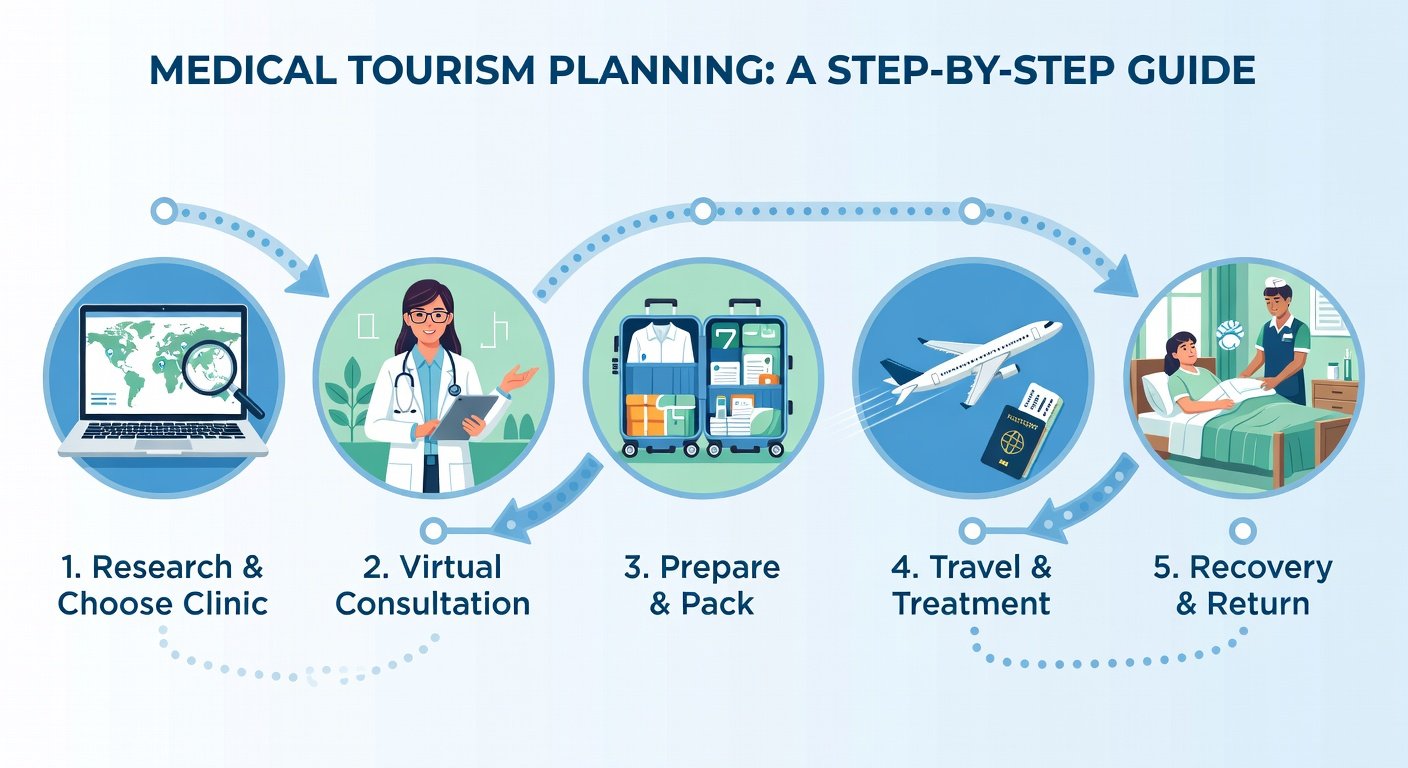
Packing Essentials for Your Trip
Pack light but smart:
- Loose clothing, button-ups for post-op ease.
- Med kit: Arnica, pain relievers, antibiotics (prescribed).
- Documents: Passport (6+ months validity), medical records, clinic contracts, insurance proofs.
- Comforts: Neck pillow, snacks, charger adapters, compression socks for flights.
For tropical spots: Bug spray, SPF 50+. Download offline translator apps.
The Procedure Day and Immediate Post-Op Care
Arrive fasted. Procedure times: Botox 30 mins, facelift 3-5 hours under sedation/general anesthesia.
Post-op: Clinic stay 1-3 nights. Monitor swelling/bruising (peaks day 2-3). Follow lymphatic drainage massages if recommended.
Post-Op Recovery Strategies at Home
Fly back after 7-10 days (earlier for injectables). Recovery timeline:
- Weeks 1-2: Rest, ice, elevate; no bending/stretching.
- Weeks 3-6: Light walks, scar creams; virtual follow-ups.
- Months 2+: Full results; maintain with skincare.
Nutrition: Protein-rich diet, hydration, avoid salt/alcohol. Hire a home nurse if needed.
Red Flags to Avoid
Steer clear of:
- Too-good-to-be-true prices (<50% market rate).
- No accreditation or vague surgeon bios.
- High-pressure sales, cash-only demands.
- Poor communication or outdated facilities.
- Reviews mentioning complications without resolutions.
Insist on personalized quotes and second opinions.
2026 Regulatory Updates for Enhanced Safety
Key changes: JCI mandates AI-driven outcome tracking; EU's MDR 2.0 requires stricter implant traceability. Thailand introduces mandatory post-op registries; Turkey's Health Ministry enforces English-speaking coordinators. US travelers note FDA's expanded oversight on returning patients via CBP screenings. These boost transparency—always confirm clinic compliance.
Bonus: Blockchain for medical records ensures seamless sharing.
Conclusion: Your Safe Path to Transformation
With meticulous planning, 2026 cosmetic surgery tourism delivers stunning results safely. Prioritize verified pros, comprehensive prep, and patient recovery. Thousands transform yearly—join them confidently. Consult a specialist today!


No comments yet. Be the first!