 Veda Tour
Introduction to Vedic Healing for Anxiety
Anxiety affects millions worldwide, but ancient Indian Ayurveda offers a holistic path to calm rooted in Vedic principles. Dating back over 5,000 years, Ayurveda views anxiety as an imbalance in the Vata dosha, characterized by restlessness, racing thoughts, and physical tension. In 2026, as modern life accelerates, these time-tested treatments provide natural relief without side effects of pharmaceuticals.
This guide dives into authentic therapies like Shirodhara, Brahmi-based remedies, and Pranayama integration. You'll find step-by-step home practices, backed by benefits, emerging research, and essential precautions for safe use.
Understanding Anxiety in Ayurveda
Ayurveda classifies mental health through three doshas: Vata (air/ether), Pitta (fire/water), and Kapha (earth/water). Anxiety stems primarily from aggravated Vata, disrupting prana (life force) flow. Vedic texts like the Charaka Samhita emphasize restoring balance via herbs, oils, breathwork, and lifestyle.
Key principles include:
- Sattva: Cultivating purity of mind through sattvic diet (fresh, light foods).
- Dinacharya: Daily routines aligned with nature's rhythms.
- Ritucharya: Seasonal adjustments to prevent doshic buildup.
Shirodhara: The Ultimate Calming Therapy
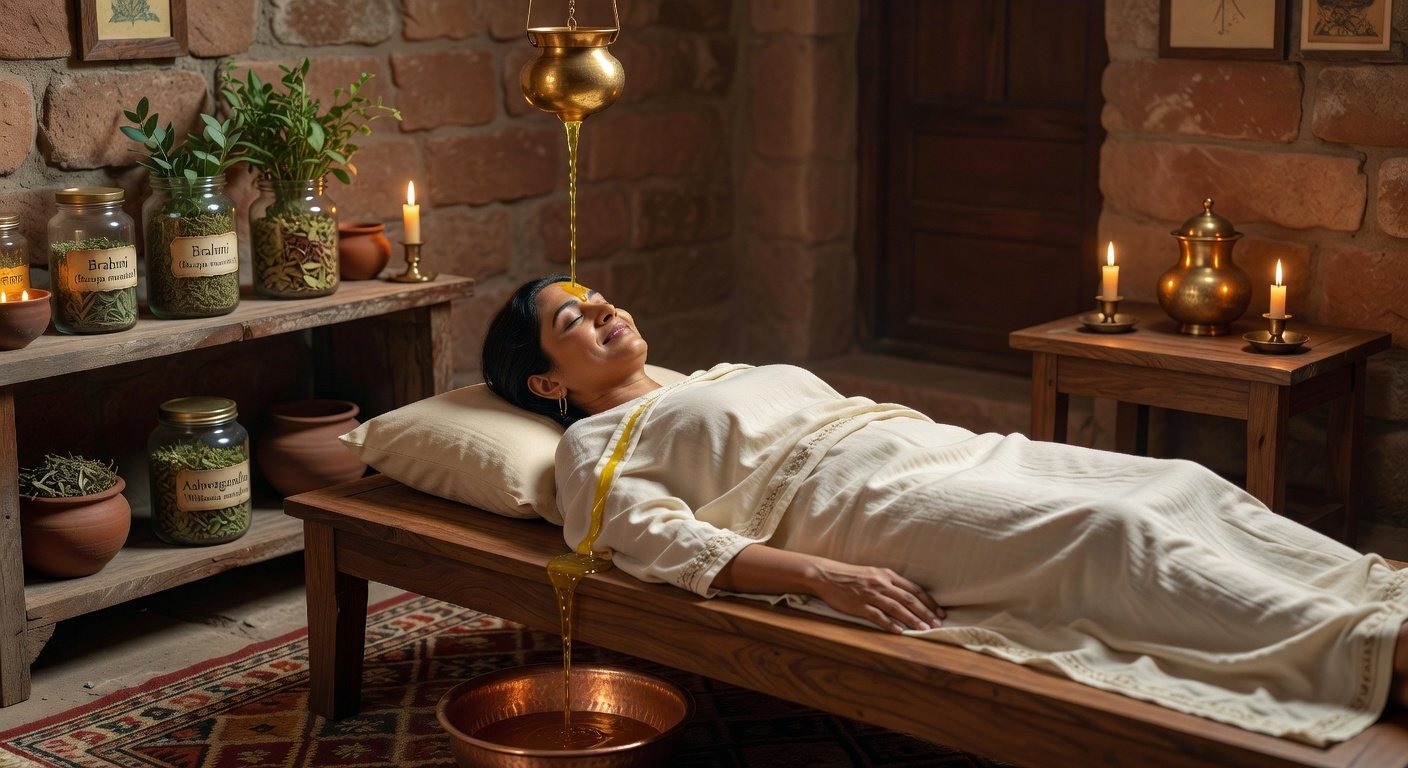
Shirodhara, meaning "head flow," involves a steady stream of warm herbal oil poured over the forehead's third eye point. This Vedic technique quiets the mind, reduces cortisol, and balances Vata.
Benefits:
- Deep relaxation and stress reduction.
- Improved sleep and focus.
- Relief from headaches and insomnia linked to anxiety.
Step-by-Step Home Shirodhara Practice:
- Prepare sesame or Brahmi oil (warm gently).
- Lie down with head slightly elevated; place a cotton strip or yarn across forehead.
- Pour oil from 4-6 inches above in a thin stream for 20-30 minutes.
- Massage scalp afterward; rest for 15 minutes.
- Practice 3-5 times weekly; consult an Ayurvedic practitioner first.
Brahmi-Based Remedies: Nature's Anxiety Antidote
Brahmi (Bacopa monnieri), revered in Vedas as a brain tonic, enhances cognitive function and lowers anxiety. It boosts GABA receptors, similar to anti-anxiety meds but gentler.
Forms and Usage:
- Tea: Boil 1 tsp dried Brahmi in 2 cups water; steep 10 mins. Drink twice daily.
- Ghrita (medicated ghee): 1/2 tsp daily with warm milk before bed.
- Powder: 500mg capsules; follow package dosing.
Combine with Ashwagandha for synergistic effects on adrenal fatigue.
Pranayama: Breathwork for Pranic Balance
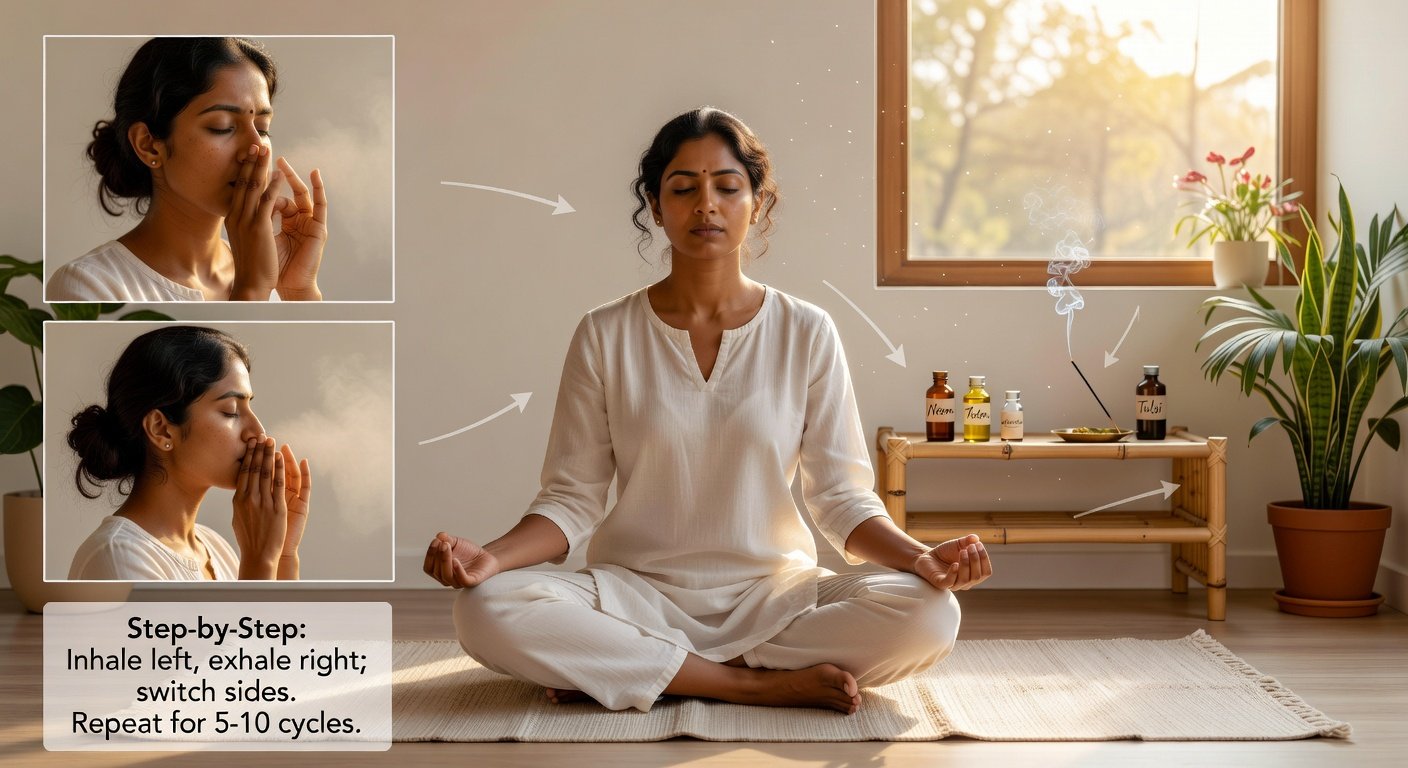
Pranayama, Vedic breath control, directly calms the nervous system. Techniques like Nadi Shodhana (alternate nostril breathing) clear energy channels, reducing Vata-induced worry.
Step-by-Step Nadi Shodhana:
- Sit comfortably in Sukhasana; close eyes.
- Use right thumb to close right nostril; inhale left for 4 counts.
- Close left with ring finger; exhale right for 6 counts.
- Inhale right 4, exhale left 6. Repeat 10 rounds.
- Practice morning/evening; build to 15 mins.
Integrate with meditation for amplified results.
Benefits of Ayurvedic Anxiety Treatments
These therapies offer multifaceted relief:
- Mental: Reduced rumination, enhanced clarity.
- Physical: Lowered blood pressure, better digestion.
- Emotional: Greater resilience to stressors.
Unlike quick-fix pills, Ayurveda addresses root causes for lasting wellness.
Modern Research Supporting Vedic Practices
Science validates these ancient methods. A study on Shirodhara showed significant anxiety reduction via EEG changes, mimicking meditation states. Brahmi trials report 20-30% symptom drops after 12 weeks.
For evidence, visit the National Center for Complementary and Integrative Health (NCCIH) page on Ayurveda, which reviews clinical data. The World Health Organization (WHO) also endorses traditional medicine's role in mental health, citing global trials on herbs like Brahmi.
Pranayama research from NIH sources links it to vagus nerve stimulation, lowering heart rate variability in anxious individuals.
Precautions and Safe Implementation
While safe, precautions ensure efficacy:
Consult Professionals: Get a dosha assessment from a certified Ayurvedic doctor, especially if pregnant, on meds, or with conditions like epilepsy.
Quality Matters: Source organic herbs from reputable suppliers to avoid contaminants.
Allergies: Patch-test oils; start low doses.
Integration: Combine with therapy or meds under guidance; avoid abrupt pharma cessation.
Lifestyle Synergy: Abhyanga (self-oil massage), yoga asanas, and avoiding caffeine amplify results.
Conclusion: Embrace Vedic Calm in 2026
In a fast-paced world, Ayurvedic treatments like Shirodhara, Brahmi, and Pranayama offer authentic Vedic healing for anxiety. Start with home practices, track progress, and seek expert guidance. Reclaim your peace naturally—your mind will thank you.
No comments yet. Be the first!